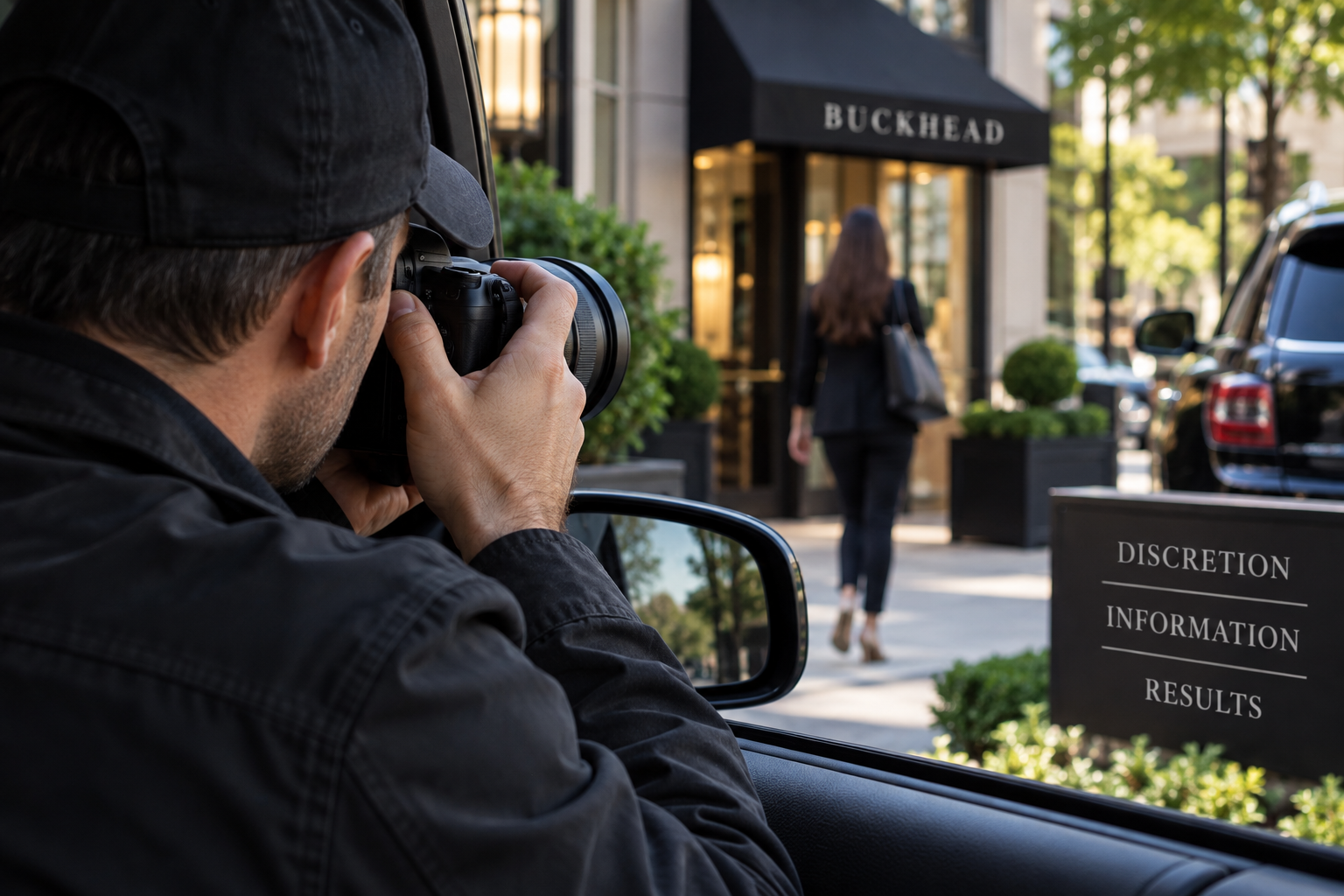
Private investigators can help clients find answers in sensitive, complicated, and often emotional situations. They may assist with locating people, documenting activity, verifying public records, finding witnesses, reviewing background information, investigating infidelity concerns, or supporting divorce and custody-related questions.
However, private investigators are not above the law. A licensed private investigator in Georgia has legal and ethical limits. They cannot hack accounts, trespass, impersonate police, illegally record conversations, place unlawful GPS trackers, access private financial records without authority, or use harassment tactics to get information.
For clients in Buckhead and throughout Georgia, understanding these limits is important before hiring anyone. A professional investigator should be clear about what they can do, what they cannot do, and why legal boundaries protect the client as much as the investigator.
This article is for general educational purposes only and is not legal advice. If you have questions about your specific case, speak with a qualified Georgia attorney.
Private Investigators Are Not Law Enforcement
One of the most important limits to understand is that private investigators are not police officers. They do not have the same authority as law enforcement. They cannot arrest someone, obtain police-only records, force someone to answer questions, enter private property without permission, or use government authority to access information.
A private investigator may be licensed and trained, but they still operate as a private professional. Their role is to gather information through lawful methods, document findings, and help clients understand facts that may be relevant to a personal, legal, family, or business concern.
Georgia’s Secretary of State explains that private detective businesses in Georgia are regulated through the Georgia Board of Private Detective and Security Agencies. The state also provides licensing guidance, rules, laws, and resources for private detective companies. This licensing structure is one reason clients should choose a legitimate company instead of someone claiming they can “find anything” without explaining legal limits. (sos.ga.gov)
Buckhead Private Investigator’s article on whether it is legal to hire a private investigator in Georgia is a helpful starting point for understanding why licensed, lawful work matters.
A Private Investigator Cannot Hack Accounts
A private investigator cannot hack into someone’s email, social media, phone, cloud storage, bank account, computer, or messaging apps. They also cannot guess passwords, use spyware, bypass security settings, trick platforms into granting access, or access private content without legal authority.
This is true even if the client believes the person is hiding something. Suspicion does not create permission to break into private accounts.
In many investigations, online information can still be useful. A private investigator may review public-facing social media profiles, business pages, public posts, usernames, websites, and other information that is lawfully available. But private messages, locked accounts, password-protected content, and private devices are different.
Buckhead Private Investigator’s article on whether a private investigator can find hidden social media accounts explains what may be possible through lawful online research without crossing privacy boundaries.
A Private Investigator Cannot Illegally Track a Vehicle
GPS tracking is one of the most misunderstood areas of private investigation. Many people assume a private investigator can place a tracker on any vehicle. That is not true.
In Georgia, vehicle tracking raises serious legal and privacy concerns. A private investigator cannot simply place a GPS device on someone else’s vehicle without proper legal authority or permission. Ownership, consent, court orders, and the specific facts of the situation can all matter.
Illegal tracking can create legal risk for the client and may make any information gathered less useful. It can also cross the line into stalking, harassment, or invasion of privacy depending on the facts.
A responsible investigator should never casually suggest GPS tracking as a shortcut. If tracking is being discussed, the investigator should explain the limits and recommend legal guidance where needed.
Buckhead Private Investigator’s guide on whether a private investigator can track a car in Georgia explains why vehicle tracking questions should be handled carefully.
A Private Investigator Cannot Trespass
A private investigator cannot enter private property without permission. They cannot climb fences, sneak into homes, enter locked buildings, access private offices, walk into restricted areas, or hide on private land to watch someone.
Surveillance must be conducted from lawful locations. That may include public streets, public parking areas, or other places where the investigator has a legal right to be. A private investigator may observe what is visible from a lawful location, but they cannot invade private spaces to get a better view.
This limit matters in infidelity, custody, business, and surveillance cases. A client may want proof quickly, but evidence gathered through trespassing can create serious problems.
Buckhead Private Investigator’s article on discreet surveillance services in Buckhead explains how professional surveillance should be handled carefully, discreetly, and within legal limits.
A Private Investigator Cannot Impersonate Police
A private investigator cannot pretend to be a police officer, federal agent, government official, court employee, attorney, or another authority figure to obtain information.
Georgia’s private detective and security agency rules also address confusing names and law-enforcement-like branding. The Georgia administrative rules state that a private detective or security agency will not be approved for licensure if the agency name is likely to create the impression that it is a public law enforcement agency or government entity. The rules also prohibit agency names that include words such as “police,” “enforcement,” or “federal.” (rules.sos.georgia.gov)
This matters because legitimate private investigators should not mislead people about who they are. Professional conduct protects the client, the public, and the integrity of the investigation.
If someone claims they can use “police connections” or impersonate officials to get information, that is a major red flag.
A Private Investigator Cannot Force Someone to Talk
Private investigators may locate witnesses, conduct interviews, verify information, or ask questions, but they cannot force someone to speak with them. They cannot threaten, intimidate, harass, or pressure someone into answering.
If a witness, subject, former spouse, employee, or family member refuses to talk, the investigator must respect legal boundaries. In legal matters, attorneys may have formal tools available through the court process, but a private investigator does not have the power to compel testimony.
Buckhead Private Investigator’s article on whether a private investigator can help find a witness in Georgia explains how investigators may help locate witnesses while staying within professional limits.
A Private Investigator Cannot Access Private Financial Records Without Authority
Financial concerns often come up in divorce, business disputes, debt matters, and hidden asset investigations. A private investigator may be able to review public records, business filings, property records, court records, bankruptcy filings, liens, judgments, professional licenses, or other lawful sources.
However, they cannot illegally access private bank accounts, tax returns, credit reports, payroll systems, investment accounts, or confidential financial documents. Those records generally require consent, legal authority, court process, or attorney-led discovery.
If someone promises to pull private bank records or hidden tax documents without legal authorization, that is not a legitimate investigative method.
Buckhead Private Investigator’s article on signs your spouse may be hiding assets during divorce explains how investigators may identify warning signs and public clues while attorneys handle formal legal discovery.
A Private Investigator Cannot Illegally Record Private Conversations
Recording laws can be complicated, and private investigators must be careful. They cannot secretly record conversations in ways that violate Georgia or federal law. They also cannot plant listening devices, wiretap phones, or record private conversations where they are not legally permitted to do so.
A professional investigator should know that evidence collection must be lawful. Even useful information can become a problem if it is gathered improperly.
If your case may involve audio recordings, conversations, hidden cameras, or electronic monitoring, speak with an attorney before taking action. Do not assume that a private investigator can record anything just because the information would be helpful.
A Private Investigator Cannot Use Hidden Cameras in Private Spaces
Hidden cameras raise serious privacy issues. A private investigator cannot place cameras inside someone’s home, bedroom, bathroom, private office, changing area, or other private space without legal authority.
Even in surveillance cases, investigators should operate from lawful public or permitted locations. They may document visible behavior in public, but they cannot invade private spaces.
This is especially important in family, custody, infidelity, and employee-related investigations. A client may want proof, but a hidden camera used illegally can create legal exposure and damage the usefulness of the evidence.
A Private Investigator Cannot Harass or Stalk Someone
Surveillance is not the same as stalking. A licensed investigator may conduct lawful observation for a legitimate purpose, but they cannot harass, threaten, intimidate, or repeatedly contact someone in a way that crosses legal boundaries.
A responsible investigator should ask why the surveillance is needed and whether the request is appropriate. They should not accept cases that appear to be about revenge, harassment, obsession, or unsafe contact.
Buckhead Private Investigator’s article on whether a private investigator can legally follow someone in Georgia explains why lawful surveillance must stay within clear limits.
A Private Investigator Cannot Guarantee Results
No ethical investigator can guarantee a specific outcome. They cannot promise to prove infidelity, find hidden assets, locate every person, uncover every account, or produce court-admissible evidence every time.
Private investigation depends on facts, available information, lawful methods, timing, the subject’s behavior, public records, and other variables. Sometimes an investigation confirms the client’s concern. Sometimes it disproves it. Sometimes it produces partial information or shows that more legal steps are needed.
A professional investigator should explain realistic expectations before starting. Buckhead Private Investigator’s article on how long a private investigation usually takes can help clients understand why timing and results vary by case type.
A Private Investigator Cannot Replace an Attorney
Private investigators can gather information, document facts, and support legal preparation, but they do not provide legal advice. They cannot tell clients how to file for divorce, what custody strategy to use, whether evidence will be admitted in court, or how a judge will rule.
If the investigation is connected to divorce, custody, business litigation, criminal concerns, or another legal matter, an attorney should guide the legal strategy. The investigator can support that strategy by gathering relevant information through lawful methods.
Buckhead Private Investigator’s article on what is considered legal evidence in a private investigation explains why admissibility, documentation standards, and chain of custody are legal-sensitive issues that should be handled carefully.
A Private Investigator Cannot Misuse Public Records
Public records can be valuable, but they still have limits. A private investigator may review public records such as court filings, property records, business records, and professional licensing information. However, not every record is public, and some records include protected or redacted information.
Georgia’s Attorney General explains that public records are generally available under the Georgia Open Records Act unless a specific exemption applies. The same guidance notes that certain personal information may be protected from disclosure. (law.georgia.gov)
A professional investigator should use public records responsibly, verify information, and avoid sharing unrelated personal details that do not serve the investigation.
Buckhead Private Investigator’s article on background checks in Buckhead and what a private investigator can legally find explains why background research requires both legal access and careful interpretation.
Why Licensed Work Matters
Licensing matters because private investigation involves sensitive information, privacy risks, legal boundaries, and professional judgment. In Georgia, private detective company licenses are issued to companies, and the company license holder must meet qualifying experience or education requirements. The Georgia Secretary of State also notes that a company must apply for employee registration on behalf of an investigator within 30 days of hiring. (sos.ga.gov)
Licensed work helps clients avoid unqualified individuals who may use illegal methods, make unrealistic promises, mishandle evidence, or expose the client to risk.
Before hiring someone, ask whether the company is licensed, how they protect confidentiality, what methods they use, and what they will not do. A reputable investigator should be comfortable explaining limits.
Buckhead Private Investigator’s guide on how to hire a private investigator in Buckhead without getting scammed can help clients identify red flags before trusting someone with a sensitive case.
What Private Investigators Can Do Legally
Understanding limits does not mean private investigators are powerless. A professional investigator may be able to help with many lawful services, including:
Reviewing public records
Conducting background research
Locating people through skip tracing
Documenting public behavior through lawful surveillance
Finding witnesses
Identifying possible social media accounts through public information
Verifying addresses or business ties
Preparing factual reports
Documenting timelines
Supporting attorneys with organized information
The difference is that these services must be done lawfully, ethically, and with a legitimate purpose.
Final Thoughts
Private investigators in Georgia can help clients find answers, but they must operate within legal limits. They cannot hack accounts, trespass, impersonate police, illegally track vehicles, force people to talk, access private financial records, illegally record conversations, use hidden cameras in private spaces, or harass someone.
Those limits are not obstacles to good investigation. They are what make the investigation credible, professional, and safer for the client.
For people in Buckhead and the Atlanta area, hiring a licensed private investigator matters because sensitive cases require discretion, legal awareness, and responsible documentation. The right investigator will explain what can be done, what cannot be done, and how to gather information without crossing legal lines.
When legal boundaries are respected, private investigation can provide clarity without creating unnecessary risk.