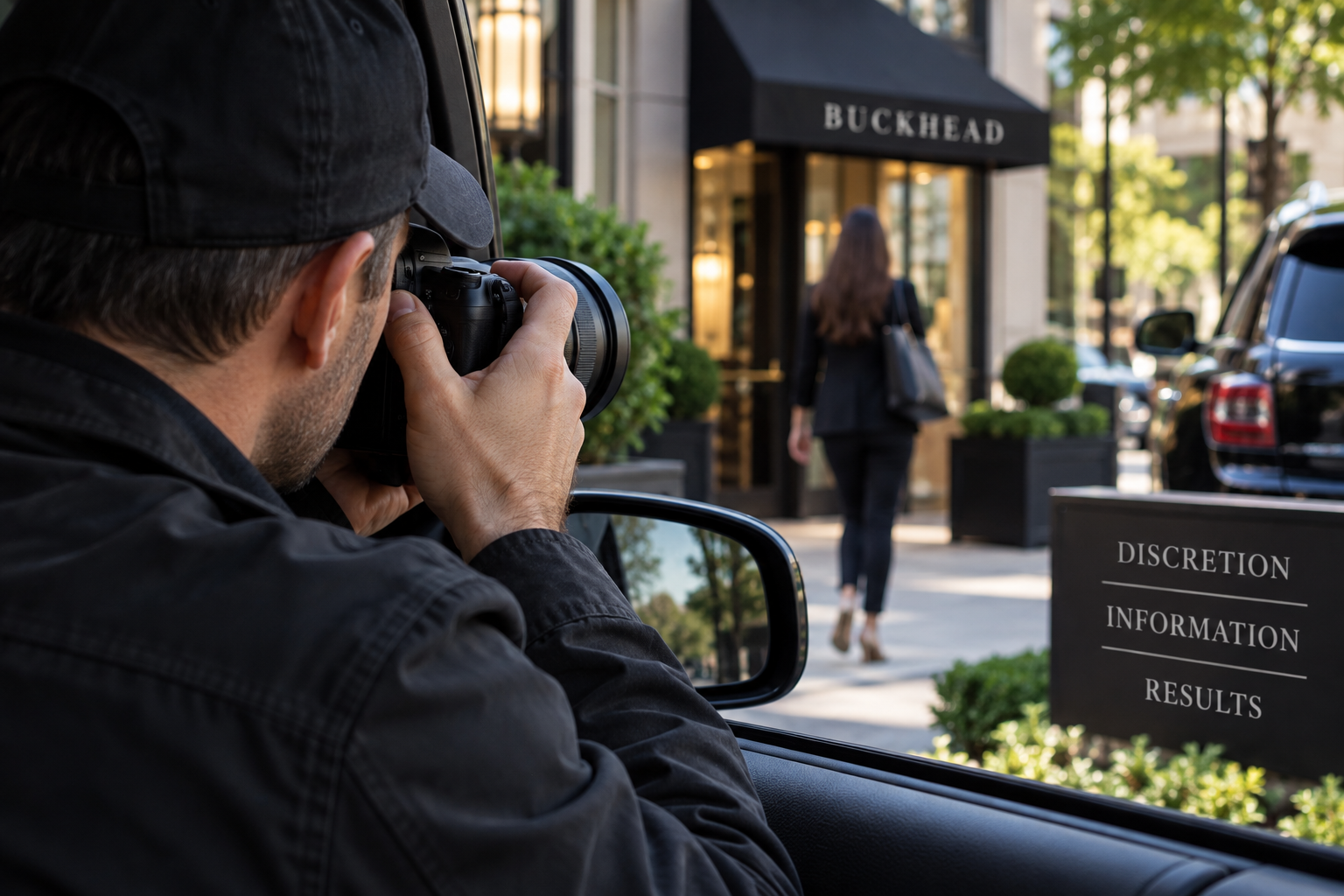
Yes, a private investigator can legally follow someone in Georgia in many situations, but only if the surveillance is done lawfully, ethically, and for a legitimate investigative purpose. Private investigators do not have unlimited authority. They cannot trespass, harass, threaten, intimidate, invade private spaces, hack devices, secretly access private accounts, or use illegal tracking methods just because a client wants information.
In Georgia, private investigation is a regulated profession. Any person or business that wants to operate as a private detective business in the state must apply for a license, and Georgia law sets licensing requirements for private detective and private security businesses. That licensing matters because surveillance is not simply “following someone around.” It requires knowledge of privacy laws, stalking laws, trespass boundaries, recording rules, GPS tracking restrictions, and proper evidence documentation.
For clients in Buckhead, surveillance may be used in infidelity investigations, child custody matters, divorce cases, fraud concerns, employee misconduct investigations, missing person cases, or legal support. The key is making sure the investigator gathers information the right way. Evidence collected illegally can create problems for the client and may be unusable in legal settings.
Following Someone Is Not Automatically Illegal
Following someone in public is not automatically illegal. A private investigator may observe a person’s public movements from places where the investigator has a legal right to be. For example, an investigator may watch a subject leave a residence, drive to a public business, meet someone at a restaurant, enter an office building, or visit another publicly observable location.
This type of surveillance is commonly used to verify behavior. A spouse may want to know whether a partner is being truthful about their schedule. A parent may need documentation related to custody agreement violations. A business owner may need to know whether an employee is misusing company time. An attorney may need facts connected to a civil or family law matter.
The legality depends on how the surveillance is conducted. Observing someone in public from a lawful location is very different from trespassing onto private property, peering through windows, threatening the subject, or repeatedly contacting them.
A professional private investigator understands this difference and works to document activity without escalating the situation.
Georgia’s Stalking Law Matters
One of the most important legal boundaries is Georgia’s stalking law. Under Georgia law, a person commits stalking when they follow, place under surveillance, or contact another person without consent for the purpose of harassing and intimidating them.
That language matters because surveillance itself is not always illegal, but surveillance done for harassment or intimidation can cross a serious line. A private investigator should not accept a case if the client’s goal is to scare, threaten, pressure, embarrass, or harass the subject.
This is one reason reputable investigators ask why the client wants surveillance. A legitimate purpose may include documenting suspected infidelity, verifying custody concerns, locating a witness, investigating fraud, or supporting an attorney. An improper purpose may include stalking an ex-partner, intimidating someone, spying out of obsession, or helping a client violate a protective order.
A responsible investigator protects the client by refusing improper requests.
A Private Investigator Cannot Trespass
Private investigators must follow trespassing laws. They cannot enter private property without permission, climb fences, sneak into gated areas, access private buildings, hide in someone’s yard, or enter a home, garage, apartment, hotel room, office, or private space without legal authorization.
This is one of the biggest differences between professional surveillance and illegal snooping. A private investigator may observe from a public street, public parking area, or other lawful location. They may not invade private property to get a better angle.
For example, an investigator may document someone arriving at a public restaurant. They may not follow that person into a private hotel room. They may observe a home from a public road. They may not walk onto the property and look through windows.
Trespassing can damage the investigation and expose both the investigator and client to legal consequences. Any investigator who suggests trespassing is not acting professionally.
Recording and Privacy Rules Still Apply
A private investigator also has to respect privacy rules. Georgia law restricts certain types of eavesdropping, surveillance, and secret observation. The Georgia statute on eavesdropping and surveillance prohibits, among other things, going onto another person’s premises or into a private place for the purpose of invading privacy by eavesdropping on conversations or secretly observing activities. It also restricts secretly intercepting private communications by device.
In practical terms, a private investigator cannot secretly record private conversations they are not legally allowed to record. They cannot bug a room, hack a phone, intercept texts, access email, or record private activity that occurs out of public view in a place where privacy is expected.
Video or photographs of public activity may be allowed in many surveillance situations, but private spaces are different. A professional investigator should know where that line is and should explain it clearly to clients.
GPS Tracking Is Not a Free-for-All
Many people ask whether a private investigator can place a GPS tracker on someone’s car. The answer is complicated and depends on ownership, consent, protective orders, and the specific facts. It is not something clients should assume is allowed.
Georgia’s eavesdropping and surveillance statute includes restrictions related to intentionally and secretly placing a GPS monitoring device or other electronic monitoring device on a motor vehicle owned or leased by another person in certain protective-order situations. Because GPS tracking can create serious privacy and legal issues, reputable private investigators are cautious about it.
Even when a client claims they own or co-own a vehicle, the investigator should evaluate the facts carefully. Who owns the vehicle? Who leases it? Who has lawful authority over it? Is there a protective order? Is there a domestic dispute? What is the purpose of the tracking?
Clients should never secretly place tracking devices themselves without legal advice. If location tracking is being considered, it should be discussed with a licensed investigator and, when appropriate, an attorney.
Private Investigators Are Not Police Officers
Private investigators are not law enforcement. They do not have police powers, search warrants, arrest authority, or special permission to ignore privacy laws. They cannot force someone to answer questions, enter private property, demand private records, or access protected information.
Their role is to gather facts through lawful methods. That may include surveillance, public record research, background checks, interviews, skip tracing, and documentation. They can observe and report, but they cannot use illegal shortcuts.
This distinction matters for clients. Hiring a private investigator does not give the client a legal loophole. If a client asks an investigator to do something illegal, the investigator should refuse.
What Legal Surveillance Usually Looks Like
Legal surveillance is usually quieter and more structured than people imagine. A private investigator may begin by gathering details about the subject, including physical description, vehicle information, known addresses, work schedule, routines, likely locations, and the purpose of the investigation.
The investigator then chooses dates, times, and locations where useful information is most likely to be observed. During surveillance, they may document public movements, arrival and departure times, locations visited, people met, and activities seen from lawful vantage points.
The final report may include written notes, timestamps, photographs, video, and a timeline of observations. A strong surveillance report is factual. It does not exaggerate or speculate. Instead of saying, “The subject is definitely cheating,” a report may state that the subject entered a specific location with another person, stayed for a certain period, and left at a specific time.
That type of documentation is more useful for personal decisions, attorney review, or legal matters.
Infidelity Surveillance in Georgia
Infidelity is one of the most common reasons people hire a private investigator. In Georgia, a private investigator may legally conduct surveillance to document publicly observable behavior, as long as they do not trespass, harass, illegally record private conversations, or invade private spaces.
A client may suspect that a spouse is lying about work, travel, social plans, or who they are spending time with. Rather than confronting the spouse based on suspicion, the client may hire a private investigator to verify activity discreetly.
This can be helpful before divorce discussions, legal consultations, or major personal decisions. However, the investigation must be handled carefully. A professional investigator will not hack a spouse’s phone, access private messages, install spyware, or break into accounts.
The goal is lawful documentation, not emotional escalation.
Child Custody Surveillance
Private investigators may also help in child custody matters. A parent may need documentation that the other parent is violating the custody schedule, leaving the child with unapproved individuals, exposing the child to unsafe environments, or misrepresenting how parenting time is being used.
Surveillance in custody cases must be especially careful. The child should not be approached, frightened, or placed in the middle of the investigation. The investigator should not interfere with parenting time or violate court orders.
If there is immediate danger to a child, law enforcement or the appropriate authorities should be contacted first. A private investigator can document concerns, but emergency safety issues require immediate action.
When handled lawfully, surveillance may provide useful information for a family law attorney to review.
Business and Employee Surveillance
Business owners may hire private investigators for surveillance related to employee misconduct, theft, fraud, unauthorized side work, misuse of company vehicles, or false injury claims. In these cases, the investigator may document public activity that supports or disproves the concern.
For example, a business may suspect that an employee who claims to be unable to work is performing similar work elsewhere. A private investigator may observe public activity and document what happens.
Business surveillance should be handled carefully because employment laws, privacy expectations, workplace policies, and legal strategy can all matter. In many cases, it is wise for business owners to involve legal counsel before acting on surveillance findings.
When Following Someone Becomes a Problem
Following someone can become legally risky when it turns into harassment, intimidation, trespassing, repeated unwanted contact, invasion of privacy, illegal recording, or violation of a protective order. It can also become problematic if the subject notices the surveillance and feels threatened.
A professional investigator works to avoid confrontation. They do not approach the subject unless the case calls for a lawful interview or contact. They do not threaten, pressure, or intimidate. They do not repeatedly contact the person. They do not follow into private spaces. They do not try to provoke a reaction.
If surveillance cannot be conducted lawfully and safely, the investigator should stop or recommend another investigative method.
Why Clients Should Not Follow Someone Themselves
Many people consider following a spouse, employee, ex-partner, or other person themselves before hiring a professional. That is usually a bad idea.
An emotionally involved person is more likely to be noticed, misinterpret what they see, escalate the situation, or cross legal boundaries. They may trespass without realizing it, confront the subject, violate a protective order, or create evidence that is not useful later.
A private investigator brings distance, planning, and documentation. They know how to observe discreetly, stay within legal limits, and prepare factual reports.
If the situation is serious enough that you are thinking about following someone, it is probably serious enough to discuss with a licensed professional.
What to Ask Before Hiring a Surveillance Investigator
Before hiring a private investigator in Georgia, ask whether they are licensed, what types of surveillance they handle, how they protect confidentiality, what methods they use, what they will not do, and how they document findings.
You should also explain your goal honestly. If your case involves divorce, custody, litigation, employment issues, or protective orders, mention that upfront. The investigator may recommend that you also speak with an attorney.
A reputable investigator will not promise illegal access, guaranteed proof, or dramatic results. They will explain what is realistic, legal, and useful.
Final Thoughts
A private investigator can legally follow someone in Georgia when surveillance is conducted for a legitimate purpose and within legal boundaries. That means observing from lawful locations, avoiding trespassing, respecting privacy, following recording laws, staying away from harassment or intimidation, and being careful with GPS or electronic tracking.
Georgia law regulates private detective businesses, and state law also addresses stalking, eavesdropping, surveillance, and GPS-related privacy concerns. Those rules matter because legal surveillance is about gathering facts, not invading someone’s life without limits.
If you need discreet surveillance for infidelity, child custody, fraud, employee misconduct, or another sensitive matter, contact a licensed private investigator in Buckhead to discuss what can be done legally and professionally.