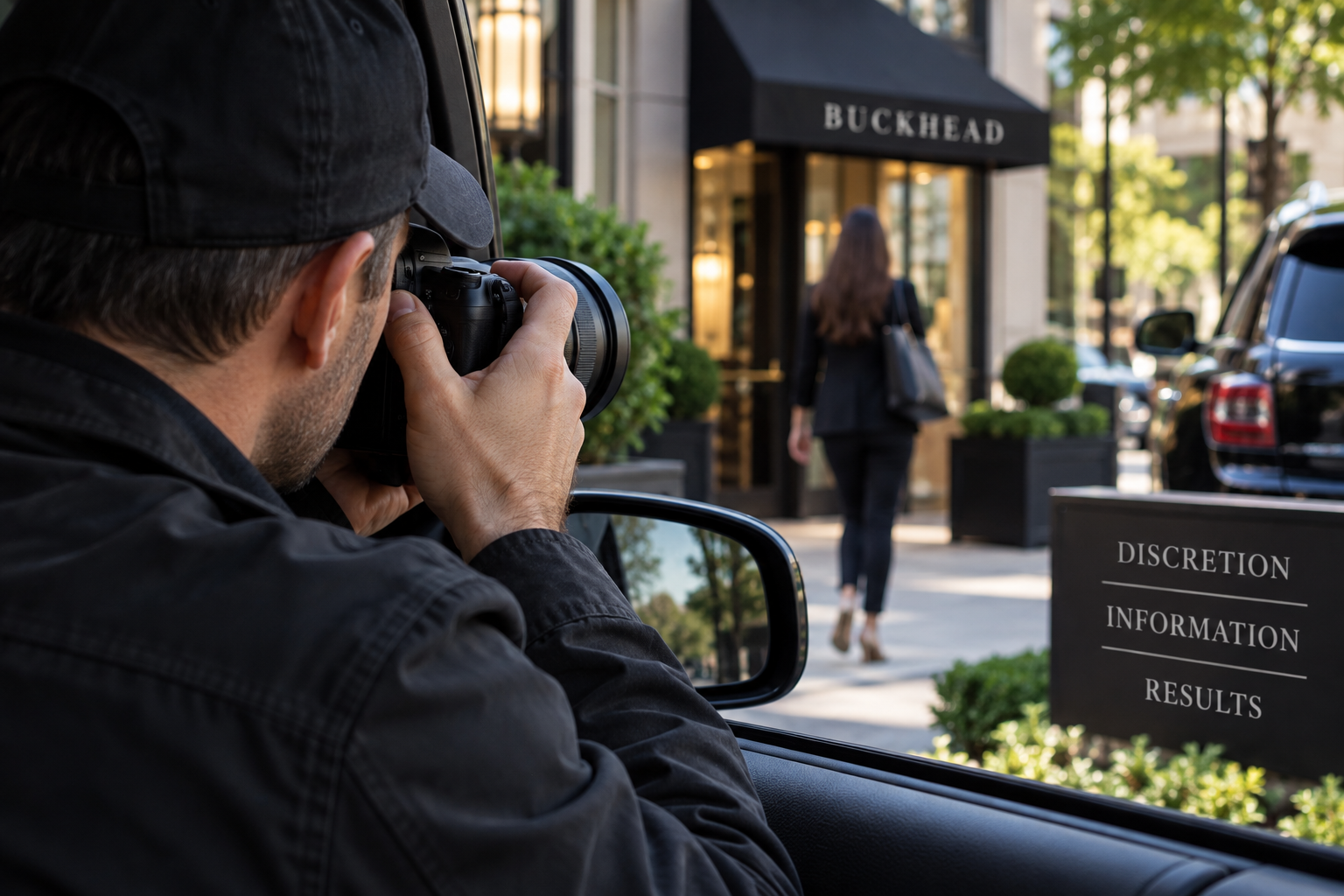
Hiring a private investigator is not something most people do every day. Many clients reach out during stressful, sensitive, or confusing situations. They may be dealing with suspected infidelity, a custody concern, a missing person, a background question, a legal matter, or a business issue. Because the situation feels urgent, it can be tempting to hire the first investigator who promises fast answers.
That is where people can get into trouble.
A legitimate private investigator can help gather information, document facts, conduct lawful surveillance, review public records, locate people, and support attorneys or individuals with evidence-based research. But an unqualified or dishonest person can waste your money, make impossible promises, cross legal lines, or put your case at risk.
If you are hiring a private investigator in Buckhead, the goal is not just to find someone available. The goal is to find someone licensed, professional, discreet, ethical, and realistic about what they can and cannot do. Understanding the warning signs can help you avoid scams and choose someone who can handle your matter properly.
Start by Confirming Georgia Licensing
The first step is simple: make sure the investigator or agency is properly licensed in Georgia.
Private detective and security agencies in Georgia are regulated by the Georgia Secretary of State’s Board of Private Detective and Security Agencies. The Georgia Secretary of State provides a page for the Board of Private Detective and Security Agencies, along with a professional license verification search that can be used to look up licensing information.
Georgia law also addresses licensing for private detective businesses. Georgia Code § 43-38-6 covers private detective and security business licenses, including qualifications and related requirements. You can review the law through Georgia Code Title 43, Chapter 38.
A scammer may avoid giving you a license number, claim licensing does not matter, say they are “connected” enough to skip formal requirements, or pressure you to hire quickly before you verify anything. Those are red flags.
A legitimate investigator should be willing to provide clear business information and explain their licensing status. If they act offended by basic verification questions, that is a reason to pause.
Be Careful With Impossible Promises
Private investigators can often find useful information, but they cannot guarantee every result. Be cautious if someone promises they can find anything, solve the case immediately, access any record, track anyone in real time, get private messages, or guarantee court-ready proof before understanding the facts.
A legitimate investigator should ask questions first. What is the situation? What information do you already have? What is your goal? Is there a legal case involved? Are there safety concerns? What is the purpose of the investigation?
No ethical investigator should promise results before reviewing the details.
For example, in an infidelity case, an investigator may be able to conduct lawful surveillance and document public behavior. But they cannot guarantee that someone will be caught cheating on a specific day. In a missing person case, they may be able to research addresses, associates, and records, but they cannot guarantee the person will be found immediately.
If you are not sure what an investigator can realistically do, start with What Does a Private Investigator in Buckhead Actually Do?. It can help set expectations before you hire.
Avoid Anyone Offering Illegal Services
One of the biggest warning signs is an investigator who offers illegal access. This may include hacking phones, breaking into email accounts, installing spyware, secretly recording private conversations, trespassing, obtaining bank records without authorization, pulling private medical records, or accessing protected government databases improperly.
A private investigator is not above the law. In Georgia, certain surveillance and recording conduct is restricted. Georgia Code § 16-11-62 addresses unlawful eavesdropping, surveillance, or recording in private places under specific circumstances. A responsible investigator should understand these limits and avoid methods that could harm your case.
This matters because illegally gathered information can backfire. It may be unusable, expose you to legal problems, damage your credibility, or create new risks. A scammer may sell illegal services because they know desperate clients want fast answers. A professional will explain what can be done legally and what cannot.
For a broader legal overview, read Is It Legal to Hire a Private Investigator in Georgia?.
Ask About Experience With Your Type of Case
Not every private investigator handles the same kinds of cases. Some focus on infidelity, surveillance, and domestic matters. Others focus on legal support, background checks, missing persons, skip tracing, business investigations, insurance claims, or attorney-assisted cases.
Before hiring someone, ask whether they have experience with your type of situation.
If you are dealing with suspected infidelity, look for someone who understands discreet surveillance, documentation, and the emotional sensitivity of the case. If your concern involves custody, look for someone who understands lawful documentation and the need to avoid interfering with children or court orders. If you need a person located, ask about skip tracing and address research. If you need a background check, ask what sources they use and what information can legally be obtained.
You can also review related service topics such as Signs You May Need an Infidelity Investigator in Buckhead, How a Buckhead Private Investigator Helps With Child Custody Cases, and Background Checks in Buckhead: What a Private Investigator Can Legally Find.
Watch Out for Pressure Tactics
Scammers often rely on urgency. They may tell you that if you do not pay immediately, you will lose your chance to get answers. They may pressure you to send money before a consultation, avoid written agreements, or refuse to explain the process.
The Federal Trade Commission’s general scam prevention guidance warns consumers to be cautious of pressure tactics, suspicious payment demands, and situations where someone pushes you to act before you have time to think.
A professional private investigator may explain why timing matters, especially in surveillance or time-sensitive legal matters. But they should still give you space to ask questions, understand fees, review the agreement, and make an informed decision.
If someone becomes aggressive, evasive, or manipulative when you ask reasonable questions, do not ignore that feeling.
Get a Written Agreement
Before paying a private investigator, make sure you understand the terms in writing. A written agreement should explain what services are being provided, how fees work, what the retainer covers, whether hourly rates apply, whether expenses are billed separately, how updates are handled, and what type of final report or documentation may be provided.
Avoid vague arrangements like “send me money and I’ll take care of it.” Also be cautious if someone only communicates through disappearing messages, refuses to provide a business name, or will not send any documentation.
A written agreement protects both sides. It helps the client understand what they are paying for and helps the investigator clarify the scope of work.
Private investigations can change as new information comes in, but the original agreement should still give you a clear starting point.
Understand the Fee Structure
Private investigation fees vary depending on the type of case, complexity, urgency, travel, surveillance hours, database research, reporting, and whether multiple investigators are needed. A lower price is not always a better deal, especially if it comes from someone unlicensed, inexperienced, or unrealistic.
Ask questions such as:
How do you bill?
Is there a retainer?
What is your hourly rate?
Are mileage or travel expenses separate?
Will I receive updates?
What happens if the retainer runs out?
What type of report is included?
Can you estimate the likely range based on the case?
A legitimate investigator may not be able to predict the exact total cost, but they should be able to explain how billing works.
Be cautious of anyone who demands unusual payment methods, refuses receipts, or asks for payment in ways commonly associated with scams. The Consumer Financial Protection Bureau’s fraud and scam resources also advise consumers to watch for fraud warning signs and protect themselves before sending money.
Ask What Information They Can Legally Find
A good investigator will be honest about what information may be available and what is off-limits. They may be able to find public records, address history, employment indicators, court records, business affiliations, social media activity, property records, or location patterns through lawful means.
They cannot legally hack accounts, access private bank records without authorization, obtain protected medical records, impersonate law enforcement, or invade private spaces.
If an investigator claims they can access anything, that is a warning sign. Professional investigators understand that legal limits are part of the job.
For more on realistic expectations, read What Information Can a Private Investigator Find About Someone?.
Review Communication Style
Good communication is especially important in private investigations because clients are often anxious and emotionally invested. During the first conversation, pay attention to how the investigator communicates.
Do they listen carefully?
Do they ask clarifying questions?
Do they explain legal limits?
Do they avoid making wild promises?
Do they explain pricing clearly?
Do they respect confidentiality?
Do they sound professional and calm?
A scammer may focus on fear, urgency, or dramatic promises. A professional will focus on facts, process, documentation, and realistic next steps.
You should also ask how updates will be provided. Some cases require frequent communication. Others may involve periods of quiet research or surveillance. Either way, you should understand what to expect.
Check for a Professional Online Presence
A private investigator does not need to be flashy, but they should have some professional presence that supports legitimacy. Look for a real website, business information, service descriptions, contact details, and content that explains their approach.
The website should not promise illegal services or guaranteed outcomes. It should give you a sense of professionalism and discretion.
You can learn more about the Buckhead firm through the About page or reach out through Contact Us to ask questions before hiring.
Be Careful With Online-Only “Investigators”
Some online services claim they can instantly reveal everything about a person for a small fee. Many of these services produce incomplete, outdated, inaccurate, or misleading information. Others may collect your payment and provide little value.
There is a difference between a database search and a professional investigation. A private investigator does not just pull information. They verify it, interpret it, document it, and connect it to the client’s legitimate purpose.
This matters because wrong information can cause serious problems. Misidentifying someone, relying on outdated records, or acting on unverified details can damage relationships, legal matters, or personal safety.
Trust Your Instincts
If something feels off, slow down. Hiring a private investigator requires trust. You may be sharing sensitive personal, legal, or financial information. You should feel that the investigator is professional, ethical, discreet, and clear about expectations.
Red flags include:
No license information
No written agreement
Pressure to pay immediately
Promises of illegal access
Guaranteed results
Unusual payment demands
No clear business identity
Poor communication
Refusal to explain methods
Encouragement to harass or confront someone
A legitimate investigator should help you get clarity, not create more risk.
Final Thoughts
Hiring a private investigator in Buckhead can be a smart step when you need facts, documentation, or professional help with a sensitive situation. But choosing the wrong person can cost you money, damage your case, or expose you to legal problems.
To avoid getting scammed, verify Georgia licensing, ask about experience, avoid illegal-service promises, get a written agreement, understand the fee structure, and pay attention to communication style. A trustworthy investigator will be realistic, professional, discreet, and honest about what they can legally do.
Before you hire, take time to ask questions and confirm that the investigator is a legitimate fit for your situation. The right professional can help you move forward with facts instead of fear.