When someone hires a private investigator for surveillance, they usually do not want attention, drama, or confrontation. They want answers. Whether the concern involves infidelity, child custody, employee misconduct, fraud, a missing person, or another sensitive matter, discreet surveillance can help document what is happening without escalating the situation.
In Buckhead, discretion matters even more. The area is known for busy commercial districts, high-end residences, restaurants, hotels, offices, luxury apartments, and active social scenes. People often value privacy, reputation, and confidentiality. That means surveillance must be handled carefully, professionally, and legally.
A private investigator in Buckhead can conduct surveillance to observe behavior, verify claims, document activity, and provide clients with objective information. But surveillance is not as simple as following someone around. It requires planning, patience, legal awareness, local knowledge, and clear communication with the client.
If you are considering hiring a private investigator for surveillance in Buckhead, here is what you should know before getting started.
What Discreet Surveillance Means
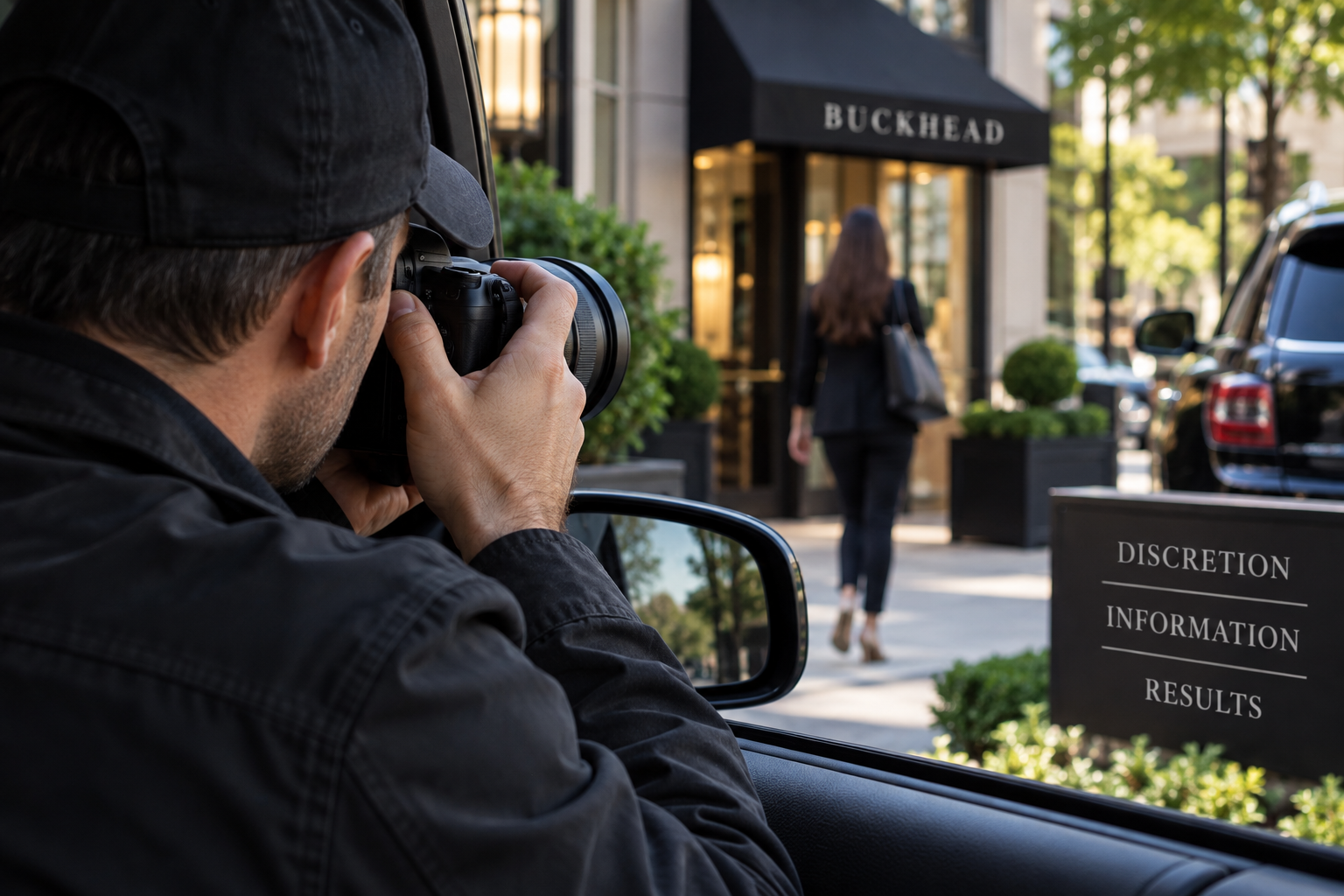
Discreet surveillance means observing and documenting activity without drawing attention to the investigator, the client, or the investigation itself. The subject should not feel harassed or confronted. The investigator should not interfere with the subject’s actions. The purpose is to gather information quietly and lawfully.
This may include watching a residence, business, public location, vehicle, hotel, restaurant, office building, or other relevant area from a lawful position. The investigator may document arrivals, departures, meetings, travel patterns, interactions, or other observable activity.
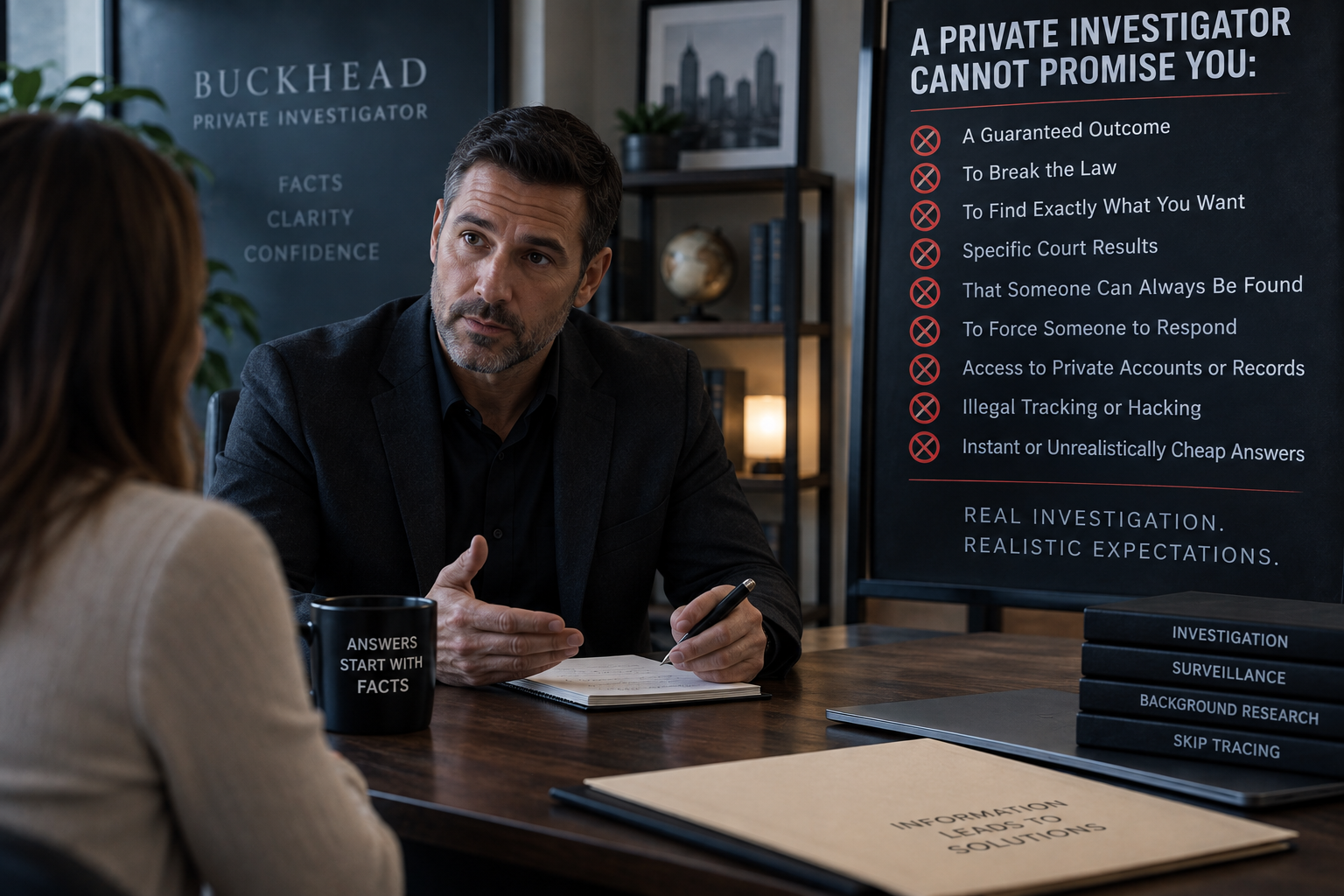
Discreet surveillance does not mean sneaking onto private property, hiding inside buildings, hacking devices, or violating privacy laws. It means using professional observation methods while staying within legal boundaries.
For clients, this distinction is important. A reputable investigator will explain what can be done legally and what cannot. Professional discretion protects the client, the case, and the usefulness of the information gathered.
Why Clients Hire Surveillance Investigators in Buckhead
Surveillance can be helpful when a client needs facts rather than assumptions. Many people contact a private investigator because they feel something is wrong but do not have proof. A partner’s schedule may not make sense. A parent may suspect custody violations. A business owner may believe an employee is lying. An attorney may need documentation for a legal matter.
In Buckhead, common reasons for surveillance may include infidelity concerns, divorce-related questions, child custody disputes, employee misconduct, workers’ compensation or insurance concerns, business investigations, fraud concerns, missing person leads, and verification of someone’s activities.
The purpose of surveillance is not to create conflict. It is to document what actually happens. That documentation can help a client make informed decisions, speak with an attorney, protect their business, or gain peace of mind.
Surveillance in Infidelity Investigations
Infidelity is one of the most common reasons people request discreet surveillance. A spouse or partner may be acting secretive, changing routines, taking more private calls, traveling unexpectedly, or spending time in places that do not match their explanation.
In these situations, surveillance can help confirm whether the person’s actions align with what they are saying. An investigator may document where the subject goes, who they meet, how long they stay, and whether there are patterns that support or disprove the client’s concerns.
This can be especially valuable before confrontation. Accusing someone based on suspicion alone can make the situation worse. Professional surveillance provides facts, which may help the client decide whether to speak with their partner, consult an attorney, or take another step.
A Buckhead infidelity investigation must be handled carefully because personal privacy and reputation are often major concerns. A professional investigator should work quietly, avoid unnecessary exposure, and keep all case details confidential.
Surveillance in Child Custody Cases
Surveillance may also be used in child custody matters. A parent may believe the other parent is violating the custody schedule, leaving the child with unapproved individuals, exposing the child to unsafe environments, or misrepresenting how parenting time is being used.
A private investigator may document pickup and drop-off times, whether the child is present, who is caring for the child, where the child is taken, and whether the parent appears to be following the custody agreement.
This type of surveillance should be especially careful and respectful. The child should never be placed in the middle of the investigation. The investigator should not interfere with parenting time, confront anyone, or create distress. The goal is objective documentation that may be reviewed by an attorney.
If there is immediate danger to a child, clients should contact law enforcement or the appropriate authorities. Private surveillance can support a custody case, but urgent safety concerns should be addressed immediately.
Surveillance for Business and Employee Concerns
Business owners in Buckhead may use surveillance when they suspect employee misconduct, internal theft, fraudulent injury claims, unauthorized side work, policy violations, or misuse of company time or assets.
For example, an employee may claim they are unable to work due to an injury while engaging in activities that contradict that claim. A business partner may be meeting with competitors. A company vehicle may be used for unauthorized purposes. A staff member may be stealing time, property, or confidential information.
Surveillance can help document observable behavior that supports or disproves these concerns. Business-related investigations should be handled carefully to avoid employment law issues, privacy violations, or improper monitoring. When appropriate, business owners should also speak with legal counsel before taking action based on surveillance findings.
A professional investigator can help gather information discreetly while reducing the risk of confrontation or disruption.
How Surveillance Is Planned
Good surveillance starts before the investigator goes into the field. The planning stage is critical. The client provides information about the subject, including name, description, vehicle, schedule, addresses, workplace, known routines, likely locations, and the specific concern being investigated.
The investigator then develops a plan. This may involve choosing the best dates and times, identifying likely observation points, reviewing traffic patterns, considering parking access, and determining what information would be most useful to document.
In Buckhead, planning is especially important because the area can be busy and difficult to navigate. Traffic, valet parking, gated residences, private buildings, hotels, restaurants, and office complexes can affect how surveillance is conducted. Local knowledge helps the investigator remain discreet and efficient.
The best surveillance plans are focused. Instead of watching randomly, the investigator targets times and places where useful information is most likely to appear.
What Investigators Can Legally Document
A private investigator may generally document activity that is visible from a lawful location, such as a public street, parking area, or other place where the investigator has a right to be. Documentation may include written notes, photographs, video, timestamps, location details, vehicle information, and descriptions of interactions.
The investigator may note when someone leaves a residence, where they go, who they meet, how long they stay, and whether their behavior matches the client’s concern. In legal or business cases, these details can be especially important.
However, there are limits. Investigators cannot trespass, enter private property without permission, peer into private spaces where someone has a reasonable expectation of privacy, hack devices, access private accounts, or secretly record protected conversations unlawfully.
A reputable Buckhead private investigator will explain these boundaries before beginning work. Legal surveillance is useful because it protects the integrity of the evidence and helps avoid problems for the client.
Why Discretion Protects the Case
Discretion is not just about avoiding embarrassment. It can protect the investigation itself. If the subject realizes they are being watched, they may change their behavior, hide activity, confront the investigator, or alert others involved. That can make it harder to gather accurate information.
Discretion also protects the client. In sensitive cases involving spouses, custody disputes, business partners, or legal matters, exposure can escalate conflict. A quiet investigation helps the client avoid unnecessary confrontation until they have facts.
Professional investigators use experience, patience, and careful positioning to remain unnoticed. They do not need to be dramatic. In fact, the best surveillance often looks uneventful from the outside. The investigator blends into the environment, observes, documents, and reports.
What Clients Should Provide Before Surveillance
Clients can help make surveillance more effective by providing accurate, detailed information. Useful details include the subject’s full name, physical description, vehicle make and model, license plate if known, home address, workplace, usual schedule, known associates, social media profiles, recent changes in behavior, and specific dates or times of concern.
Clients should also explain the goal of the investigation. Are they trying to confirm infidelity? Document custody violations? Verify employment activity? Locate someone? Support a legal case? The clearer the goal, the better the investigator can plan.
It is also important to be honest. If the client leaves out important facts, the investigation may be less effective or legally complicated. A professional investigator needs a full picture to assess the best approach.
What Clients Should Not Do
Clients should avoid trying to conduct their own surveillance at the same time. Following someone yourself can be risky. You may be noticed, misinterpret what you see, escalate the situation, or put yourself in danger. You could also create legal problems if you trespass, harass someone, or violate privacy laws.
Clients should also avoid installing tracking devices, hacking accounts, secretly recording conversations, or accessing private information without authorization. These actions can damage the case and expose the client to serious consequences.
If you feel tempted to take matters into your own hands, that is often a sign that it is time to speak with a professional investigator. A trained investigator can gather information in a more controlled, lawful, and discreet way.
What Surveillance Reports Usually Include
After surveillance is complete, the investigator typically provides a report. The report may include a timeline of events, dates, times, locations, descriptions of activity, photographs, video, vehicle details, and observations relevant to the case.
A strong report should be clear and factual. It should not exaggerate, speculate, or include unsupported conclusions. For example, instead of saying someone is “definitely cheating,” a professional report may state that the subject arrived at a specific location, met a specific person, remained there for a certain period, and left at a certain time.
This kind of factual reporting is more useful in legal, business, and personal decision-making. It allows the client and, if needed, their attorney to evaluate what the evidence shows.
How Long Surveillance Takes
The length of a surveillance investigation depends on the situation. Some cases may produce useful information in a short period, especially if the client has accurate details about where and when the subject will be active. Other cases may require multiple sessions to establish a pattern.
For example, if a client suspects a spouse meets someone every Thursday evening, the investigator can focus on that window. If the client only knows that something seems wrong but has no specific timing, the case may require more planning and observation.
Surveillance is often most effective when based on patterns. One observation may be useful, but repeated activity can provide stronger documentation. A professional investigator can help determine a practical plan based on the client’s goals and budget.
Confidentiality Matters
Clients often worry about who will know they hired an investigator. Confidentiality should be a core part of the process. A professional private investigator should protect the client’s identity, case details, evidence, and communications.
This is especially important in Buckhead, where personal relationships, professional reputations, business connections, and community circles can overlap. Clients may be dealing with sensitive marriages, high-profile business matters, custody disputes, or legal cases.
Before hiring an investigator, ask how information is handled, how reports are delivered, and who has access to case materials. A trustworthy investigator should take confidentiality seriously from the first conversation.
When Surveillance May Not Be the Right Tool
Surveillance is useful, but it is not always the best approach. In some cases, public record research, background checks, interviews, or digital research may be more effective. For example, if the goal is to verify someone’s criminal history, surveillance may not be necessary. If the goal is to locate a person, records research may need to come first.
A good investigator will not recommend surveillance simply because it is dramatic or expensive. They should explain which methods fit the situation and why. Sometimes the best investigation combines surveillance with other tools, such as background research, skip tracing, or legal support.
Talk to a Buckhead Private Investigator Before Taking Action
Discreet surveillance can provide clarity when a situation feels uncertain, emotional, or high-risk. Whether you are dealing with infidelity concerns, child custody issues, business misconduct, fraud, or another sensitive matter, professional surveillance can help document facts while protecting your privacy.
The most important step is choosing an investigator who understands the law, knows the Buckhead area, and values discretion. Surveillance should be quiet, legal, strategic, and focused on useful documentation.
If you need answers and want to avoid acting on suspicion alone, contact a trusted private investigator in Buckhead to discuss discreet surveillance services and learn what options may be available for your situation.