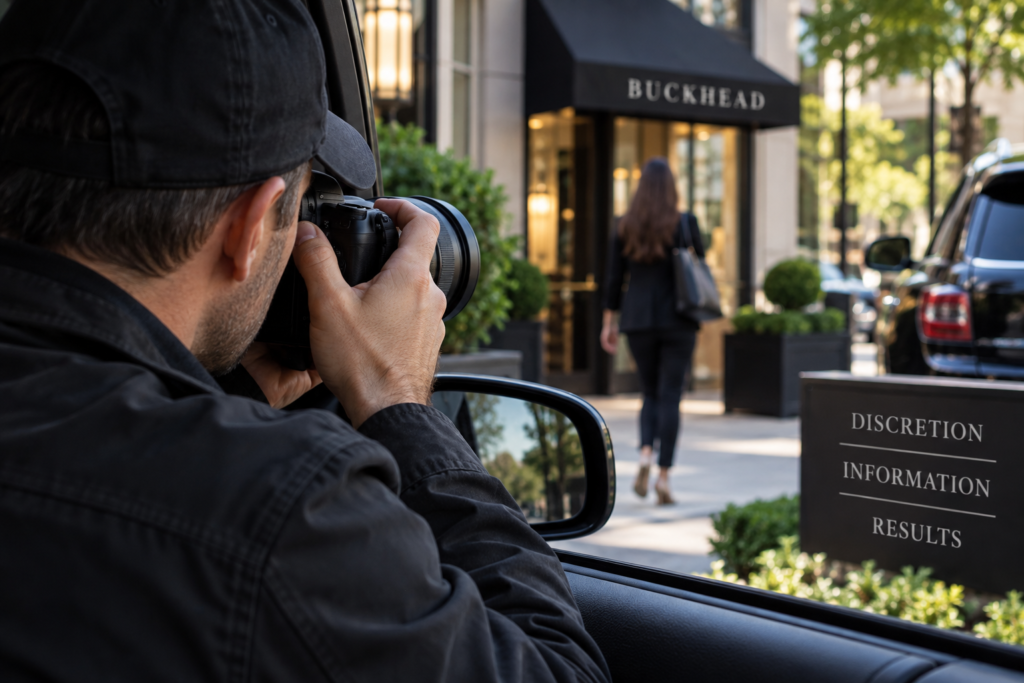
Hiring a private investigator for surveillance can feel intimidating if you have never done it before. Many clients know they need answers, but they do not know what the process actually looks like. They may picture dramatic scenes from television, but real surveillance is usually much more careful, quiet, and methodical.
A surveillance investigation is not about confrontation, intimidation, or “catching” someone in a dramatic moment. It is about lawful observation, discreet documentation, and factual reporting. The goal is to help a client understand what is happening, where someone goes, who they meet, whether their behavior matches what they have claimed, and whether there is information that may be useful for a personal, legal, or business matter.
Surveillance may be used in infidelity concerns, divorce situations, child custody disputes, cohabitation questions, business concerns, insurance-related matters, or other situations where documented activity matters. But it must be handled carefully. A private investigator must operate within legal and ethical boundaries, avoid trespassing, respect privacy limits, and document only what can be lawfully observed.
If you are considering surveillance in Buckhead or the Atlanta area, understanding the process can help you know what to expect before hiring a professional.
Surveillance Starts With a Consultation
A surveillance investigation usually begins with a consultation. This is where the investigator learns what the client is concerned about, what information is already known, and what the client is hoping to document.
During this conversation, the investigator may ask about the subject’s name, address, vehicle, work schedule, habits, known locations, photos, social media information, routines, possible associates, and relevant dates. The investigator may also ask why surveillance is being considered and whether an attorney is involved.
This step matters because surveillance should have a clear purpose. Watching someone without a defined goal can waste time and money. A stronger approach is to identify what needs to be confirmed, when the activity is most likely to happen, and what information would actually be useful.
If you are not sure what details to gather before contacting an investigator, Buckhead Private Investigator’s guide on what information can a private investigator find about someone can help you think through the basics.
The Investigator Reviews Legal and Practical Boundaries
Before surveillance begins, a professional investigator should explain what can and cannot be done. Private investigators do not have unlimited authority. They cannot trespass, break into homes or vehicles, hack accounts, place illegal tracking devices, impersonate law enforcement, harass someone, or invade private spaces.
Surveillance usually involves observing from public places or other lawful vantage points. That may include public streets, parking areas, business districts, or other places where the investigator has a legal right to be. The investigator may document activity with notes, photos, video, timestamps, and location details, depending on the situation.
Clients sometimes ask whether a private investigator can legally follow someone. The answer depends on how it is done. Buckhead Private Investigator’s article on whether a private investigator can legally follow someone in Georgia explains why lawful observation is different from stalking, harassment, or illegal tracking.
Understanding these boundaries protects both the client and the investigation.
The Investigator Builds a Surveillance Plan
Surveillance is more effective when it is planned. The investigator may review the subject’s routine, work schedule, expected travel patterns, likely meeting places, and the best times to observe. The plan may include where to begin, what vehicles or locations to watch, how long surveillance should run, and what type of activity would be considered relevant.
For example, an infidelity-related investigation may focus on evenings, weekends, travel patterns, or unexplained absences. A custody-related matter may focus on parenting exchanges, who is present around the child, whether the child is taken to certain locations, or whether court-ordered routines are followed. A business-related matter may focus on employment activity, vendor meetings, or other observable patterns.
Timing is important. Surveillance at the wrong time may produce little information, even if the underlying concern is real. The investigator may recommend specific windows based on the information the client provides.
This is why honesty during the consultation matters. If the client leaves out important details, the investigator may not be able to plan effectively.
Background Research May Come Before Surveillance
In some cases, surveillance is not the first step. An investigator may recommend background research, skip tracing, social media review, employment verification, or address confirmation before beginning field surveillance.
This can make surveillance more efficient. If the subject’s address, vehicle, workplace, or routine is unclear, the investigator may need to confirm those details first. Otherwise, surveillance time could be wasted at the wrong location or during the wrong hours.
For example, if someone has moved, changed vehicles, started a new job, or is using a different address, skip tracing or background research may help establish a better starting point. Buckhead Private Investigator’s article on how to tell if you need surveillance, background research, or skip tracing explains how different methods work together.
A good investigator should recommend the approach that fits the case, not simply default to surveillance every time.
Surveillance Is Usually Quiet and Discreet
Real surveillance is designed to avoid attention. The investigator’s job is to observe without disrupting the subject, alerting them, or interfering with normal behavior. Discretion is especially important in places like Buckhead, where reputation, privacy, and professionalism may be major concerns.
The investigator may use a low-profile vehicle, avoid obvious behavior, change positions when appropriate, and document activity without drawing attention. The goal is to blend into the environment and observe only what can be seen lawfully.
A client should not join the surveillance or try to help by following the subject themselves. This can create safety risks, emotional conflict, and legal concerns. It can also compromise the investigation if the subject notices familiar vehicles or faces.
Buckhead Private Investigator’s blog on why discretion matters when hiring a private investigator in Buckhead explains why privacy and professionalism are central to this kind of work.
The Investigator Documents What Happens
During surveillance, the investigator records factual observations. This may include dates, times, locations, movements, people present, vehicles, activities, and relevant interactions. Depending on the situation, the investigator may also capture photos or video from lawful vantage points.
Good documentation is clear and objective. It should not exaggerate, guess, or add emotional interpretation. For example, instead of saying, “The subject was obviously hiding something,” a report may state, “The subject left the residence at 7:14 p.m., drove to a restaurant, met with an unidentified adult, remained inside for approximately 90 minutes, and returned to the residence at 9:02 p.m.”
That kind of factual detail is more useful than assumptions. If the information is later reviewed by an attorney, court, business owner, or client, the report should show what was observed, not what someone felt about it.
Buckhead Private Investigator’s article on how private investigators document evidence for court explains why organized documentation matters.
Surveillance May Involve Waiting
One of the most realistic things clients should understand is that surveillance often involves waiting. A subject may not leave the location. They may change plans. They may stay home. They may take a different route. They may not meet anyone during the surveillance window.
This does not always mean the investigation failed. Surveillance depends on human behavior, and human behavior is not always predictable.
A professional investigator should communicate realistic expectations before the work begins. Some cases require multiple surveillance windows to identify patterns. Others may produce useful information quickly if the timing is right.
Clients should avoid expecting instant answers. Surveillance is not a guaranteed event. It is an investigative method used to document activity when it occurs.
The Investigator May Adjust the Plan
Surveillance plans can change in real time. If the subject leaves unexpectedly, goes to a new location, changes vehicles, meets someone, or enters a public place, the investigator may adjust accordingly.
However, those adjustments still have limits. A private investigator cannot enter private property without permission, force access, violate privacy, or continue in a way that becomes unsafe or unlawful.
In some cases, the investigator may decide that continuing surveillance is not practical. For example, if the subject enters a restricted location, if weather conditions reduce visibility, if traffic creates safety concerns, or if the subject appears aware of the surveillance, the investigator may pause or change strategy.
Professional judgment matters. The best investigators know when to keep observing and when to avoid compromising the case.
Clients Should Avoid Interference
Clients can help by providing accurate information, but they should avoid interfering once surveillance begins. Do not call or text the subject to “test” them. Do not drive by the location. Do not ask friends to help watch. Do not confront the subject during or after surveillance. Do not post about the situation online.
Interference can change the subject’s behavior and make documentation harder. It can also escalate conflict, especially in divorce, infidelity, custody, or business disputes.
If the investigator observes something important, the client should wait for the report and discuss next steps calmly. If an attorney is involved, the attorney should usually review the findings before the client acts on them.
This is especially important in divorce-related concerns. Buckhead Private Investigator’s article on what should you do if you think your spouse is lying during divorce explains why acting too quickly can create problems.
Surveillance Can Support Different Types of Cases
Surveillance may be useful in several situations, depending on the facts and legal boundaries.
In infidelity matters, surveillance may help document patterns, meetings, travel, or activity that supports personal decision-making or attorney strategy. Buckhead Private Investigator’s article on what to expect when you hire a private investigator for infidelity explains this process in more detail.
In child custody matters, surveillance may help document parenting-time concerns, unsafe behavior, missed exchanges, or inconsistencies. The blog on how a Buckhead private investigator helps with child custody cases covers this topic further.
In business matters, surveillance may support concerns about employee activity, business ties, location claims, or other observable behavior. For business-related questions, background research may also be useful.
The key is that the surveillance must be connected to a legitimate purpose and conducted lawfully.
The Final Report Summarizes the Findings
After surveillance is complete, the investigator usually prepares a report. The report may include a timeline, locations, observations, photos, video references, and relevant details. The format can vary depending on the case, but the goal is to create a clear record of what happened.
A strong report should be factual, organized, and easy to understand. It should separate confirmed observations from unknown details. If a person is unidentified, the report should not pretend otherwise. If activity was not observed, the report should say that clearly.
The final report can help the client make decisions, share information with an attorney, or decide whether more investigation is needed.
Buckhead Private Investigator’s article on what is considered legal evidence in a private investigation explains why evidence must be gathered and presented properly.
Surveillance Does Not Always Prove What You Expect
Sometimes surveillance confirms a concern. Sometimes it does not. A spouse may not be where they claimed to be. A parent may violate an agreed schedule. A person may meet someone they denied knowing. A subject may return to an address they claimed they no longer use.
Other times, surveillance may show no unusual activity during the observation window. That does not always mean the client was wrong, but it does mean the specific surveillance period did not document the suspected behavior.
Clients should be prepared for either outcome. The purpose of surveillance is to gather facts, not force a specific conclusion.
A professional investigator cannot promise a certain result. Buckhead Private Investigator’s guide on what are the limits of private investigation in Georgia is helpful for understanding what a PI can and cannot guarantee.
How to Prepare Before Hiring a PI for Surveillance
Before contacting a private investigator, gather as much relevant information as you can legally access. This may include the subject’s full name, current address, vehicle description, license plate if known, workplace, typical schedule, recent photos, social media profiles, known associates, and important dates or times.
Also think about your goal. Are you trying to confirm a location? Document a pattern? Verify behavior? Support an attorney’s strategy? Make a personal decision? The more specific the goal, the more focused the surveillance can be.
Do not take risky steps to gather information. Do not hack accounts, install tracking devices, open private mail, or access information you are not legally allowed to view. If you are unsure, ask an attorney or licensed investigator first.
When to Contact Buckhead Private Investigator
If you believe surveillance may help your situation, contact a professional before the matter escalates. Early planning can help identify the best timing, the most useful approach, and the legal limits involved.
Buckhead Private Investigator can discuss your concerns, review what information you already have, and explain whether surveillance, background research, skip tracing, or another investigative method may be appropriate.
To get started, contact Buckhead Private Investigator and request a confidential consultation.
Final Thoughts
A surveillance investigation is a careful, discreet process designed to document facts. It usually begins with a consultation, legal boundary review, planning, field observation, documentation, and a final report.
Real surveillance is not about confrontation or drama. It is about lawful observation, patience, timing, and objective reporting. The best results come from clear goals, accurate information, professional discretion, and realistic expectations.
If you are considering surveillance in Buckhead or the Atlanta area, working with a professional private investigator can help you understand what is happening while protecting your privacy and keeping the process focused on facts.