The death of a family member can create emotional and practical challenges, particularly when relatives disagree about how an estate should be handled.
A dispute may arise over the validity of a will, the circumstances surrounding a change in estate planning documents, the location of relevant witnesses, or whether important information has been withheld.
Sometimes these disagreements involve misunderstandings or incomplete records.
In other cases, family members may raise concerns about undue influence, questionable signatures, missing property, or conflicting accounts of events before someone died.
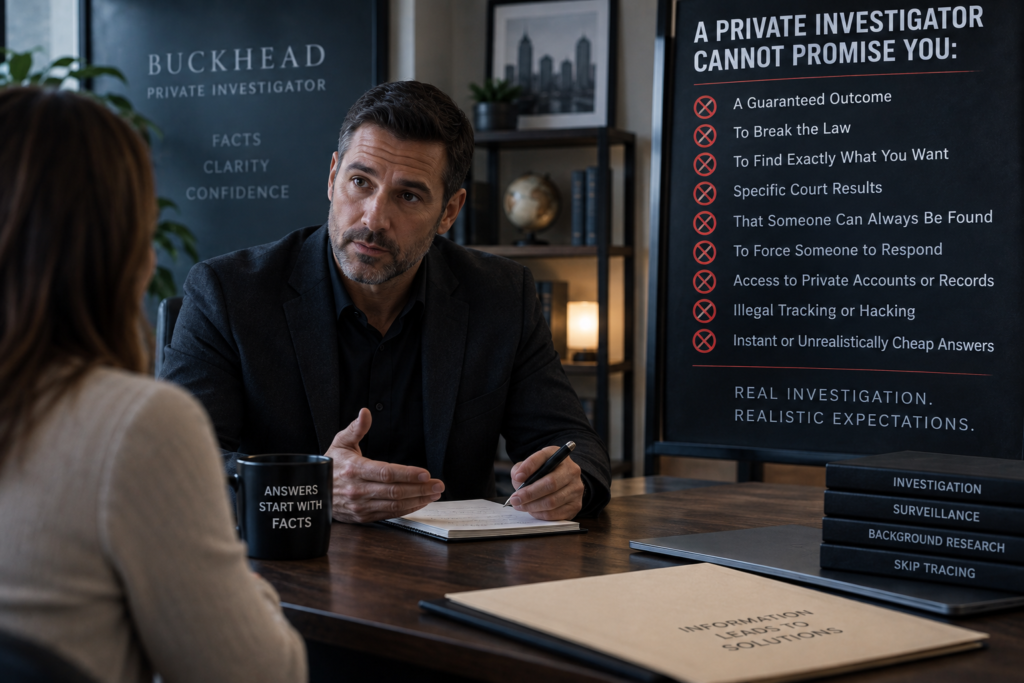
A private investigator may be able to assist with certain factual questions by researching public records, locating witnesses, and documenting information that may be relevant to the dispute.
However, a private investigator cannot determine whether a will is legally valid, decide who should inherit property, or replace the work of an estate attorney.
What Is a Contested Will?
A will contest is a legal dispute challenging whether a will should be accepted or given effect.
The grounds for a challenge depend on applicable law and the circumstances.
Possible concerns may involve whether the person creating the will had the required capacity, whether the document was properly executed, whether undue influence occurred, or whether fraud affected the process.
Disagreement with an inheritance decision alone does not necessarily create a valid legal challenge.
A probate attorney should evaluate whether there is a legally recognized basis for contesting the document.
Georgia probate proceedings have specific procedural requirements and deadlines, making early legal guidance important.
What Types of Estate Disputes Might Need Investigation?
Not every estate disagreement requires private investigation.
An investigator may be useful when there is a factual question involving events, people, records, or relationships that could be researched lawfully.
For example, relatives may disagree about who was present during important events or whether someone can be located to provide relevant information.
There may also be questions about publicly documented property transactions or business relationships.
The value of the investigation depends on whether those facts matter to a legitimate legal issue.
An estate attorney should help identify that connection.
Can an Investigator Locate Witnesses?
Witness location is one potential role.
An attorney may need to identify or contact individuals who were present when a document was signed or who have firsthand knowledge of relevant circumstances.
A private investigator may assist by researching current contact information through lawful methods.
Depending on the case, the investigator might identify former caregivers, neighbors, business associates, or other relevant individuals.
However, locating someone does not guarantee that the person will cooperate, remember the events, or provide testimony favorable to the client.
A witness’s independent account may support, contradict, or complicate the original allegations.
What About Suspected Undue Influence?
Undue influence is a legal concept that may arise when someone allegedly exerted improper pressure over another person’s decision-making.
Family members may become suspicious when a will changes unexpectedly or when an individual appears to have had significant control over the deceased person’s relationships.
However, unusual circumstances are not automatically proof of undue influence.
An investigator may help establish a factual timeline of relevant relationships, public events, or identifiable witnesses.
Whether those facts satisfy the legal elements of undue influence is for attorneys and courts to assess.
The investigation should avoid treating personal dislike or family conflict as evidence of wrongdoing.
Can a Private Investigator Find Hidden Estate Assets?
An investigator may be able to research some publicly documented property and business interests.
For example, certain real estate ownership records, corporate registrations, or legal filings may be available through public sources.
However, private bank balances, confidential financial accounts, and tax records are generally not available simply because someone hires an investigator.
A probate attorney may need to pursue records through the estate administration process or lawful court procedures.
A forensic accountant may also be appropriate when complex financial tracing is required.
A private investigator’s role is complementary, not a substitute for legal access to financial records.
Why Timelines Can Be Important
Estate disputes frequently involve events occurring over several months or years.
A family member may want to understand when a will changed, when someone became involved in the deceased person’s care, or when relevant property transactions occurred.
An investigator may help organize lawfully available records into a timeline.
This can help attorneys identify gaps, contradictions, or individuals who may possess relevant information.
However, a timeline is only as reliable as its underlying sources.
Unverified family recollections should be labeled differently from documented events.
Can Investigators Review Public Records?
Public records may provide information about real estate transfers, litigation, business entities, or other potentially relevant matters.
The availability and significance of those records vary.
For example, a property transfer may be perfectly legitimate even if relatives did not know about it.
An investigator should not characterize a transaction as fraudulent simply because it appears unusual.
Proper research involves confirming identities, dates, and source accuracy.
If the investigation raises legal or financial questions, the findings should be referred to qualified specialists.
What If Family Members Suspect a Forged Signature?
Suspected forgery should be addressed through the estate attorney.
A private investigator may help locate relevant witnesses or identify where original documents may have been maintained.
However, determining whether a signature is authentic may require qualified forensic document examination.
Comparing signatures informally or relying on an investigator’s visual impression is not sufficient to establish forgery.
Original documents, provenance, and appropriate expert analysis may be important.
Attorneys can determine the proper steps for securing and examining disputed records.
How Does Probate Affect the Investigation?
Probate is the legal process through which certain estate matters are administered.
In Georgia, probate courts handle matters involving wills and estate administration, subject to applicable jurisdiction and procedural rules.
Legal questions about standing, objections, deadlines, evidence, and the appropriate court should be directed to a Georgia probate attorney.
An investigator can potentially support the attorney’s factual research but cannot file legal challenges on a client’s behalf or guarantee a result.
Starting with the legal issue helps avoid spending money on irrelevant investigative work.
Why Privacy Matters in Estate Investigations
Estate disputes may involve medical history, family relationships, financial records, and sensitive personal information.
Not all of that information is publicly accessible.
An investigator should use lawful methods and avoid accessing protected medical, financial, or electronic records without proper authorization.
Family relationships do not automatically create a right to another person’s private account information.
Georgia’s Private Detective and Security Agency Board regulates private detective businesses.
Clients should work with appropriately licensed professionals who understand the limits of investigative authority.
Can Investigation Help Resolve a Dispute Without Trial?
Potentially.
Independent information may clarify a misunderstanding, identify records that resolve a factual disagreement, or establish that certain allegations cannot be supported.
This may help attorneys evaluate settlement possibilities or determine whether further litigation is worthwhile.
However, an investigation can also uncover new questions or produce inconclusive results.
It should not be presented as a guaranteed way to settle a family conflict.
A fair investigation focuses on facts, regardless of which relative those facts favor.
What Information Should You Provide?
For an initial discussion, explain the specific dispute and the factual question that needs answering.
You may identify the deceased person’s name, relevant dates, known witnesses, public records, and the attorney handling the matter.
Avoid sending unnecessary sensitive documents before confirming how they will be handled.
If litigation is already underway, it may be best for the attorney to coordinate the investigative scope.
This helps ensure that the work is relevant and appropriately managed.
When Should You Contact an Attorney First?
If a will is about to be admitted to probate, a legal deadline is approaching, or estate property may be transferred, contact an attorney promptly.
Do not delay legal action while attempting to perform your own investigation.
The attorney can determine whether urgent court procedures or preservation measures are needed.
An investigator should become involved only when there is a clear factual purpose that fits within a lawful investigative scope.
Is a Private Investigator Right for Every Estate Dispute?
No.
Some disagreements are primarily legal interpretation questions.
Others require accounting, valuation, document examination, or mediation.
A private investigator may be useful when the matter involves locating people, verifying public information, or documenting relevant circumstances.
Choosing the right professional is essential.
A consultation should clarify what an investigation can realistically answer.
Final Thoughts
A contested will or estate dispute can involve complicated factual questions as well as significant family tension.
A private investigator may help locate relevant individuals, research public records, and organize information that an estate attorney can evaluate.
However, investigators cannot decide legal ownership, invalidate wills, access restricted records without authorization, or guarantee litigation outcomes.
For individuals dealing with estate-related concerns in Buckhead or the greater Atlanta area, carefully scoped fact-finding may help provide clarity.
Learn more about Buckhead Private Investigator or contact the agency to discuss whether a particular investigative question is appropriate.
This article provides general information and is not probate or legal advice.