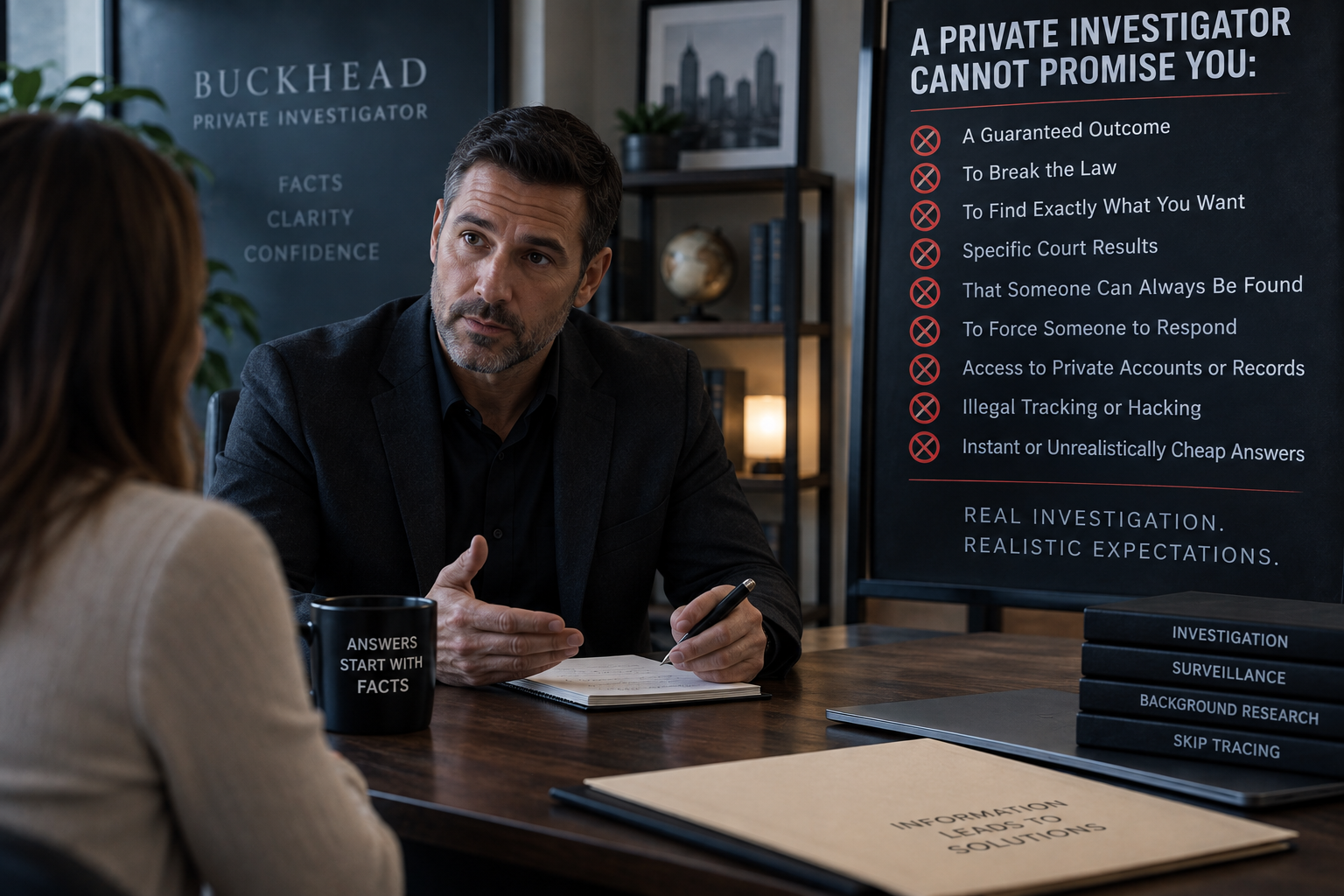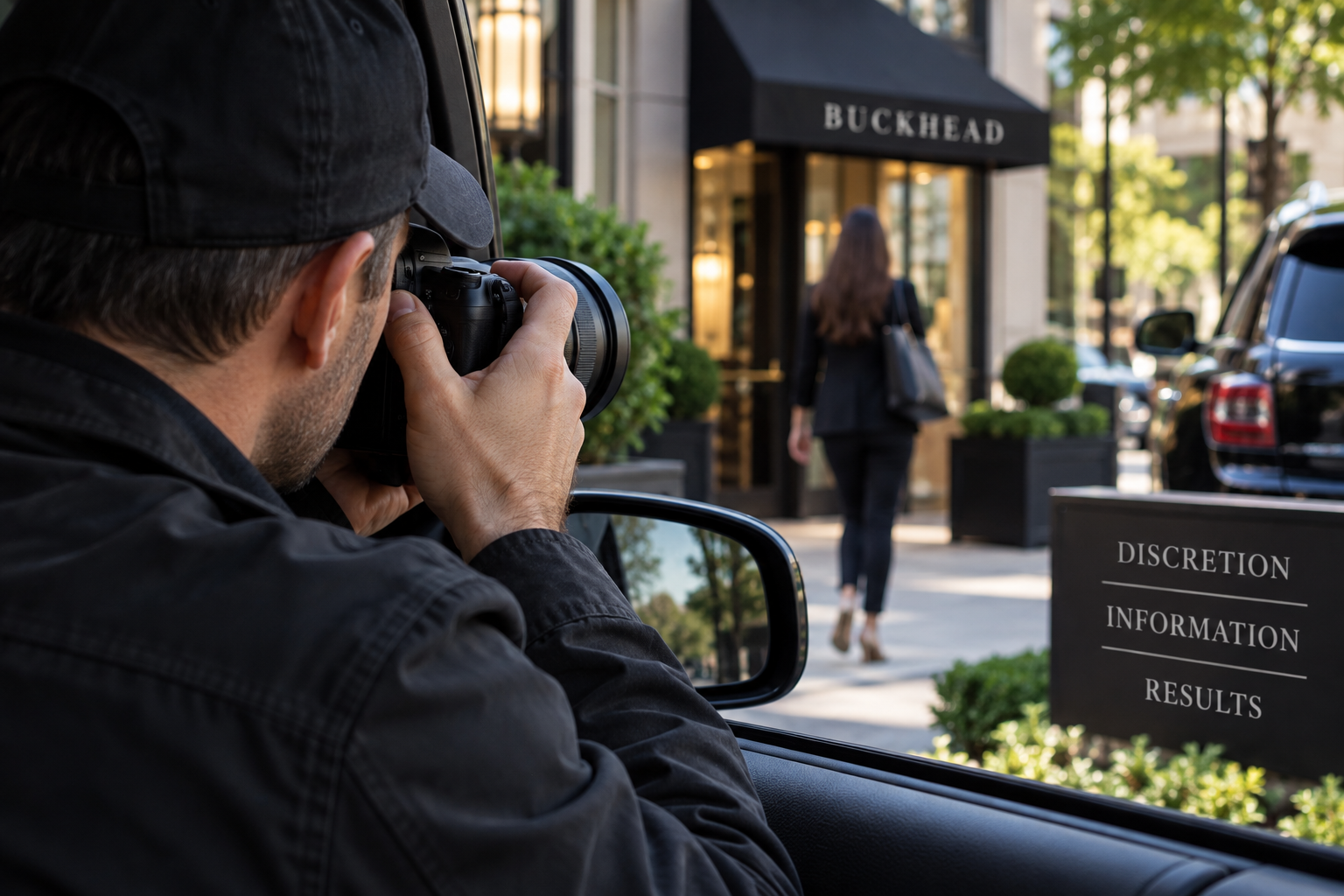
Hiring a private investigator is often connected to a sensitive situation. A person may be worried about infidelity, divorce, child custody, hidden assets, missing persons, business concerns, online activity, or personal safety. In many cases, the client is not only looking for information. They are also looking for answers without exposing their private concerns to the wrong people.
That is where discretion matters.
A private investigation can involve personal relationships, family conflict, financial concerns, professional reputations, business risks, legal questions, and emotionally charged decisions. If the investigation is handled carelessly, it can create unnecessary exposure, damage trust, alert the subject, or make the situation harder to resolve.
For clients in Buckhead and the Atlanta area, discretion is especially important because personal, professional, and social circles can overlap. A family matter may involve someone known in the community. A business concern may involve partners, employees, or investors. A divorce-related investigation may require privacy before legal action begins. The way an investigation is handled can be just as important as what the investigation finds.
This article is for general educational purposes only and is not legal advice.
Discretion Protects Client Confidentiality
When someone contacts a private investigator, they may share information they have not told friends, family members, coworkers, or even the person closest to the situation. That information may involve suspicion, fear, embarrassment, financial stress, relationship concerns, or legal uncertainty.
A professional investigator should treat that information carefully. Confidentiality is not just about keeping secrets. It is about protecting the client’s privacy, limiting unnecessary disclosure, and handling sensitive details with professionalism.
Clients should feel comfortable asking how information will be stored, who will have access to it, how communication will happen, and what details are needed before an investigation begins. A responsible investigator should be able to explain their process clearly.
The Georgia Secretary of State explains that the Georgia Board of Private Detective and Security Agencies regulates private detective businesses in the state, including licensing and related oversight. Working with a properly licensed company can help clients avoid unqualified operators who may not understand professional obligations.
If you are unsure what a private investigator can legally and professionally do, Buckhead Private Investigator’s article on whether it is legal to hire a private investigator in Georgia is a helpful starting point.
Sensitive Family Matters Require Careful Handling
Many private investigation cases involve family concerns. These may include infidelity suspicions, divorce preparation, child custody issues, missing family members, vulnerable adult concerns, or disputes between relatives.
These situations are personal and emotional. A careless investigation can make conflict worse. For example, if a spouse realizes they are being investigated, they may change behavior, delete information, become more secretive, or confront the client. If a child custody matter is handled aggressively, it may create unnecessary stress for the family. If a missing person concern is discussed too openly, it may expose private family details to people who do not need to know.
Discretion helps keep the investigation focused and controlled. A professional investigator should avoid unnecessary attention, communicate carefully, and document facts without escalating the situation.
For divorce-related concerns, Buckhead Private Investigator’s article on when to hire a private investigator before filing for divorce in Georgia explains why timing, documentation, and legal boundaries matter before legal action begins.
Infidelity Investigations Need Privacy
Infidelity investigations are one of the most sensitive reasons someone may contact a private investigator. Clients often feel anxious, embarrassed, angry, or unsure whether their concerns are valid. They may not want anyone else to know what they suspect.
Discretion is critical in these cases. If the subject becomes aware of the investigation too soon, they may change their routine, stop communicating with certain people, avoid public places, delete online activity, or become more difficult to observe lawfully. This can make it harder to gather useful information.
A professional investigator should conduct infidelity investigations without drawing attention. That includes careful communication with the client, lawful observation, clear reporting, and realistic expectations about what can and cannot be documented.
Buckhead Private Investigator’s guide on what to expect when you hire a private investigator for infidelity explains how this type of investigation may work while staying within legal and ethical limits.
Child Custody Cases Require Extra Sensitivity
Child custody investigations must be handled with particular care. The focus should always be on the child’s well-being, not revenge, embarrassment, or pressure. A private investigator may help document relevant parenting behavior, routines, safety concerns, supervision issues, or other facts that an attorney may review.
Discretion matters because children should not be pulled into adult conflict unnecessarily. A responsible investigator should avoid creating scenes, approaching children inappropriately, or using tactics that could increase stress for the child.
In custody-related matters, documentation should be factual and relevant. It should focus on observable behavior and legitimate concerns rather than emotional assumptions.
Buckhead Private Investigator’s article on how a Buckhead private investigator helps with child custody cases explains why careful documentation can matter in family law-related situations.
Business Investigations Can Affect Reputations
Discretion is not only important in family cases. It also matters in business-related investigations.
A business owner may need to verify a potential partner, investigate suspicious activity, review public records, locate a person, document employee misconduct, or assess concerns before making a major decision. If handled carelessly, the investigation can damage relationships, alert the wrong person, or create unnecessary reputational risk.
In Buckhead, where professional networks can be close and business relationships may overlap socially, discretion is especially valuable. A private investigation should not create gossip, disrupt business operations, or expose concerns before the client is ready to act.
A professional investigator should understand how to gather information quietly, document findings clearly, and avoid unnecessary contact with people who do not need to be involved.
Discretion Helps Avoid Alerting the Subject
In many investigations, the person being investigated should not know about the investigation while it is active. If they find out too early, the information gathered may become less useful.
For example, someone may change their routine, stop visiting certain places, delete social media posts, move assets, avoid public behavior, or become more guarded. In some cases, early exposure can also increase conflict or safety concerns.
Discretion helps preserve the natural pattern of behavior. A professional investigator should use methods that are lawful, low-profile, and appropriate for the case. That does not mean secrecy at all costs. It means avoiding unnecessary attention while staying within legal boundaries.
Buckhead Private Investigator’s article on discreet surveillance services in Buckhead explains why surveillance should be handled professionally, carefully, and legally.
Privacy Laws and Legal Limits Still Apply
Discretion does not mean a private investigator can do anything secretly. Legal limits still apply.
A private investigator cannot hack accounts, trespass, impersonate law enforcement, access private devices without permission, place illegal tracking devices, or illegally record private conversations. Georgia has laws and licensing requirements that shape what investigators can and cannot do. The Georgia Secretary of State notes that private detective company licenses are issued to companies and that the licensing process includes rules, requirements, and oversight through the state board.
This distinction matters. A discreet investigator is not someone who breaks rules quietly. A discreet investigator is someone who understands how to gather information legally while protecting the client’s privacy.
Buckhead Private Investigator’s article on whether a private investigator can legally follow someone in Georgia explains how lawful surveillance differs from stalking, harassment, or illegal conduct. Their article on whether a private investigator can track a car in Georgia is also important for anyone considering GPS tracking or vehicle-related questions.
Public Records Still Require Privacy Awareness
Private investigators often use public records. These may include court records, property records, business filings, licensing information, address history, or other lawful sources. Public records can be useful, but they still require careful handling.
Just because information is public does not mean it should be shared casually. A professional investigator should use public records for the purpose of the case, verify the information, and avoid unnecessary exposure of unrelated personal details.
Georgia’s Attorney General explains that the Georgia Open Records Act generally allows public access to government records unless those records are exempt by law. The same guidance notes that certain sensitive personal information may be protected or redacted. This is a reminder that even public information has privacy boundaries.
Buckhead Private Investigator’s article on background checks in Buckhead and what a private investigator can legally find explains how lawful research can support sensitive decisions without crossing legal lines.
Professional Conduct Builds Trust
Discretion is not only about hiding an investigation from others. It is also about how the investigator behaves throughout the process.
A professional private investigator should communicate clearly, avoid exaggerated claims, explain limitations, protect client information, provide realistic timelines, and document findings carefully. They should not pressure clients, promise impossible results, or encourage illegal actions.
Professional conduct is especially important when clients are emotionally overwhelmed. A good investigator should help the client focus on facts, not impulsive decisions. They should also be willing to say when a request cannot be handled legally.
If an investigator acts casually with sensitive information, gossips about other cases, uses fear-based sales tactics, or suggests questionable methods, that is a warning sign. Buckhead Private Investigator’s guide on how to hire a private investigator in Buckhead without getting scammed explains what clients should watch for before hiring someone.
Discretion Matters in Communication
Client communication should be handled carefully. In sensitive cases, even a phone call, email subject line, voicemail, text message, invoice, or appointment reminder can create unwanted exposure.
Before the investigation begins, clients should discuss preferred communication methods. Should the investigator call, text, or email? Are there times that are safer to communicate? Should messages be brief? Should invoices or records be labeled in a particular way? Who is authorized to receive updates?
These details may seem small, but they matter. In family, divorce, custody, or business cases, careless communication can alert the wrong person or create unnecessary stress.
A professional investigator should understand that discretion begins with the first contact.
Reports Should Be Clear, Factual, and Controlled
At the end of an investigation, the report may be one of the most important deliverables. Reports can include timelines, observations, photos, video references, public record findings, and summaries.
Discretion matters here too. A report should include relevant facts, not unnecessary personal details. It should be written professionally and avoid emotional language, speculation, or unsupported conclusions.
If the report may be shared with an attorney, court, business partner, or other decision-maker, clarity is essential. A disorganized or overly dramatic report can reduce the usefulness of the investigation.
Buckhead Private Investigator’s article on how private investigators document evidence for court explains why evidence documentation should be organized, factual, and legally mindful.
Avoiding Unnecessary Exposure Protects the Client
The purpose of hiring a private investigator is often to reduce uncertainty. But if the investigation is not handled discreetly, it can create new problems.
Unnecessary exposure can lead to confrontation, reputational damage, workplace issues, family conflict, social embarrassment, deleted evidence, changed behavior, or legal complications. In some cases, exposure can make the investigation harder or less useful.
Discretion protects the client’s options. It allows the client to gather information, speak with an attorney if needed, make informed decisions, and decide when or whether to act.
This is especially important before major decisions such as filing for divorce, pursuing custody changes, ending a business relationship, confronting a spouse, or taking legal action.
What Clients Can Do to Protect Discretion
Clients also play a role in keeping an investigation discreet. Before hiring a private investigator, it is helpful to think carefully about what information you share and with whom.
Avoid posting about the situation online. Do not confront the subject before speaking with your attorney or investigator. Do not tell mutual friends about the investigation. Do not try to investigate illegally on your own. Do not access accounts, devices, vehicles, or private spaces without legal authority. Keep documentation organized and share it only with appropriate professionals.
If you have already gathered screenshots, messages, photos, or notes, ask the investigator how to provide them securely. A professional can help determine what may be useful and what may not be relevant.
Questions to Ask About Discretion Before Hiring
Before hiring a private investigator, ask questions about confidentiality and communication. For example:
How do you protect client privacy?
Who will know about my case?
How will you communicate with me?
How do you store reports, photos, and videos?
Will you explain legal limits before starting?
How do you avoid alerting the subject?
What information do you need from me?
How will findings be documented?
Can you work with my attorney if needed?
These questions can help you determine whether the investigator takes discretion seriously.
Final Thoughts
Discretion matters when hiring a private investigator in Buckhead because the issues involved are often sensitive, personal, legal, financial, or reputation-related. A careless investigation can expose private concerns, alert the subject, escalate conflict, or reduce the usefulness of the information gathered.
A professional investigator should protect confidentiality, communicate carefully, follow legal boundaries, document findings clearly, and avoid unnecessary exposure. This is especially important in family matters, infidelity concerns, divorce preparation, child custody cases, business investigations, and legal-related documentation.
If you are considering hiring a private investigator, look for someone who understands that discretion is not just a preference. It is part of doing the work responsibly. In sensitive cases, how the investigation is handled can matter just as much as what it uncovers.