When someone hires a private investigator, they are usually looking for answers. They may need documentation for an infidelity concern, a divorce case, a child custody dispute, a missing person matter, a witness location issue, a background concern, or another sensitive situation. But not every piece of information an investigator finds automatically becomes useful legal evidence.
Legal evidence is not just “proof” in the casual sense. It must be gathered, documented, preserved, and presented in a way that can be reviewed by an attorney, court, or decision-maker. In some cases, evidence may need to be authenticated, tied to the correct person or event, and shown to have been collected lawfully.
For clients in Buckhead and throughout Georgia, this is one reason working with a professional investigator matters. A screenshot, rumor, photo, video, or online search result may feel convincing, but if it cannot be verified, explained, or connected to the right context, it may not carry the weight the client expects.
This article is for general educational purposes only and is not legal advice. If you are involved in a court case or expect evidence to be used legally, speak with a qualified Georgia attorney about your specific situation.
Legal Evidence Must Be Relevant and Lawfully Collected
In a private investigation, evidence may include photographs, video, written reports, public records, witness information, timelines, surveillance observations, social media documentation, address research, background findings, or other case-related materials. However, the value of that evidence depends on how it was gathered and whether it is relevant to the legal issue.
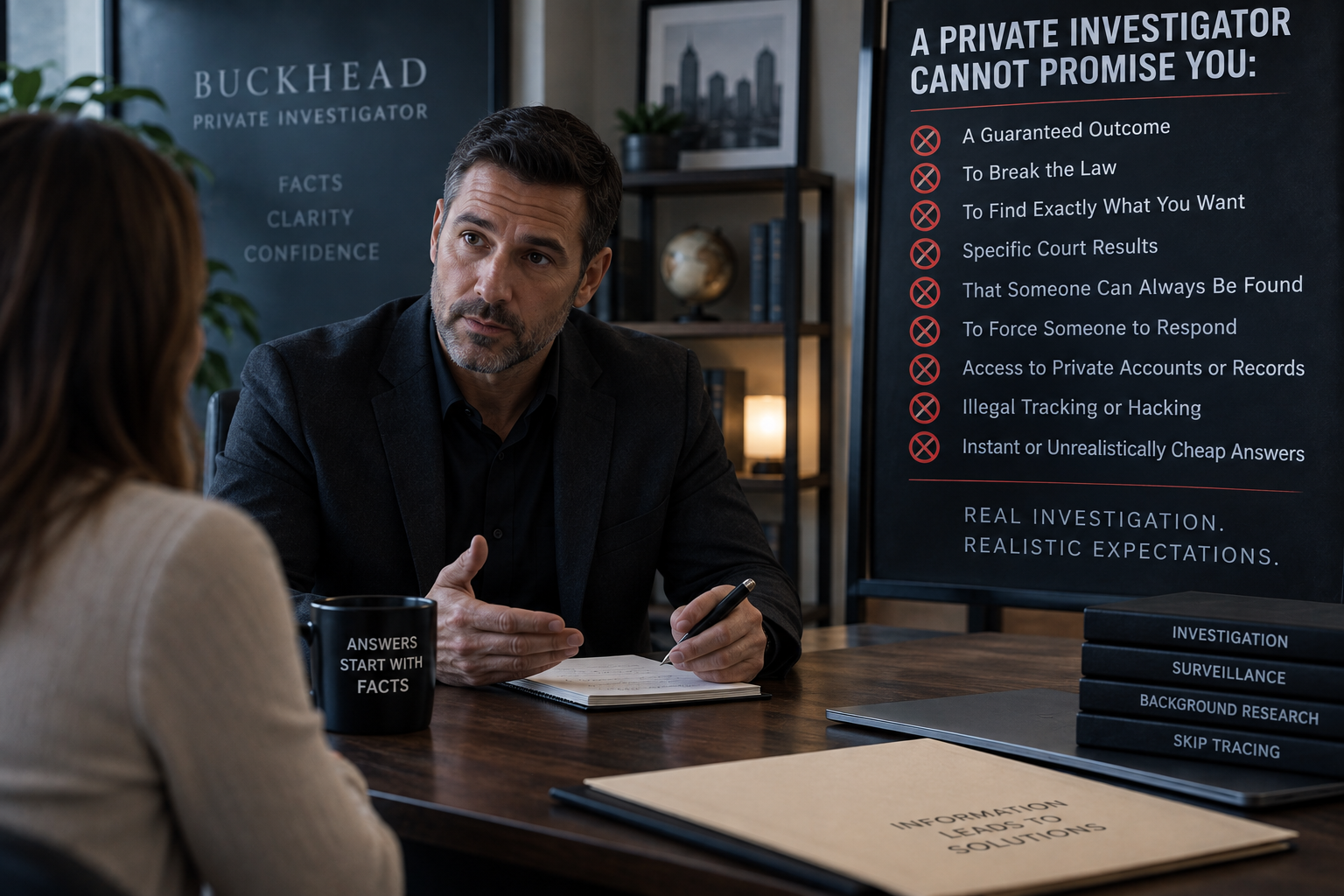
A private investigator should not gather information by hacking accounts, trespassing, impersonating law enforcement, accessing private devices without permission, illegally recording private conversations, or placing illegal tracking devices. Evidence gathered through improper methods may create problems for the client and may not be useful in court.
That is why legal boundaries matter from the beginning. Georgia’s Secretary of State explains that the Georgia Board of Private Detective and Security Agencies regulates private detective businesses in the state, including licensing and related rules. A client should work with an investigator who understands those professional responsibilities.
Buckhead Private Investigator’s article on whether it is legal to hire a private investigator in Georgia is a helpful starting point for understanding why lawful methods matter.
Documentation Is the Foundation of Strong Evidence
Good evidence is not only about what was found. It is also about how clearly it was documented.
A professional investigator should be able to explain when information was gathered, where it came from, how it was observed, who was present, and what the information appears to show. This may include written notes, time-stamped photos, video clips, public record copies, surveillance logs, reports, and supporting details.
For example, a photo without context may raise questions. Where was it taken? When was it taken? Who took it? Has it been edited? What does it actually show? A properly documented photo is more useful because it can be placed into a timeline and supported by the investigator’s report.
Buckhead Private Investigator’s article on how private investigators document evidence for court explains why organized reporting, timelines, and professional documentation matter in legal-related investigations.
Authentication Matters
For evidence to be considered in a legal setting, someone may need to show that the evidence is what it claims to be. This is called authentication.
Under Georgia evidence law, authentication or identification requires evidence sufficient to support a finding that the matter is what its proponent claims it is. Georgia’s evidence code gives examples such as testimony from a witness with knowledge, distinctive characteristics, public records, and evidence describing a process or system used to produce an accurate result.
In practical terms, this means a photo, video, document, screenshot, or report may need supporting context. Someone may need to explain how it was obtained, why it is connected to the case, and why it appears reliable.
For private investigations, authentication can become important with photos, video, social media evidence, public records, and surveillance observations. If evidence cannot be tied to the right person, date, place, or event, it may be less useful.
This is one reason investigators focus on clear documentation rather than simply collecting random pieces of information.
Photos and Video Need Context
Photos and video are common in private investigation work, especially in surveillance, infidelity, custody, and activity verification cases. But photos and video do not speak for themselves.
A video may show a person entering a building, but what building was it? When was the footage captured? How was the person identified? Was the investigator in a lawful location when recording? Does the footage show the full context, or only a small moment?
A photo may seem important, but if it is blurry, cropped, undated, or disconnected from the investigation timeline, it may be challenged or misunderstood.
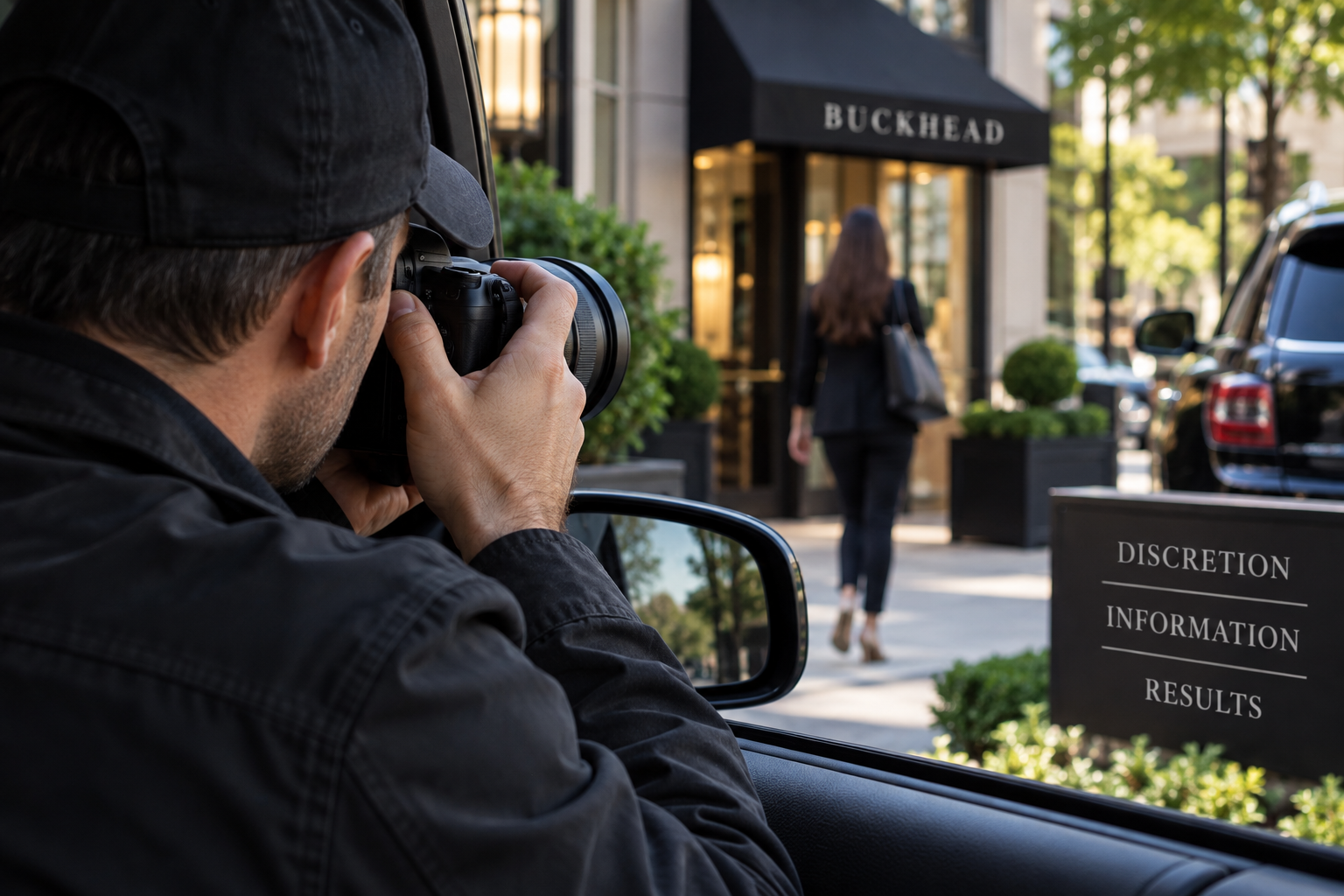
Professional investigators typically document photos and video with date, time, location, case notes, and observations. They may also include a written explanation of what they personally observed. This helps attorneys and clients understand what the image or footage does and does not prove.
Buckhead Private Investigator’s article on discreet surveillance services in Buckhead explains how lawful observation and documentation may support sensitive cases.
Chain of Custody Helps Preserve Evidence Integrity
Chain of custody refers to tracking how evidence is collected, handled, stored, transferred, and preserved. The goal is to show that the evidence has not been altered, lost, mixed up, or mishandled.
This concept is especially important for physical items, digital files, photos, video, records, or anything that may later be reviewed in a legal setting. If several people handle evidence, there should be a clear record of who had it, when they received it, what they did with it, and how it was stored.
In a private investigation, chain of custody may involve maintaining original files, preserving metadata when possible, keeping copies organized, labeling records clearly, and avoiding unnecessary edits. It may also involve documenting when evidence was provided to the client, attorney, or another authorized party.
Chain of custody does not automatically make evidence admissible, but poor handling can create questions about reliability. A strong process helps protect the value of the evidence.
Investigator Reports Can Be Important
A private investigator’s report may be one of the most useful parts of the case file. A report can organize the investigation into a clear timeline, explain what was done, identify sources, summarize observations, and attach supporting materials.
A good report should be factual rather than emotional. It should avoid exaggeration, assumptions, or conclusions that go beyond what was actually observed. For example, an investigator might document that a person entered a location at a certain time and exited later. They should not claim to know what happened inside unless that information was lawfully observed or otherwise verified.
Reports may be useful for attorneys because they provide a structured summary of the investigation. They can help identify what evidence exists, what questions remain, and what next steps may be appropriate.
Buckhead Private Investigator’s article on what to expect when you hire a private investigator for infidelity explains how reporting and communication can help clients understand findings in sensitive cases.
Public Records Can Be Evidence, But They Must Be Verified
Public records can play a major role in private investigations. These may include court filings, property records, business registrations, professional licenses, address history, marriage or divorce records, liens, judgments, or other lawful records.
However, public records should still be verified and placed in context. A business filing may show a registered agent but not necessarily prove who controls a company day to day. An address may be old or connected to a relative. A court record may show a case existed but may not explain the full outcome without additional review.
Georgia’s Attorney General explains that the Georgia Open Records Act generally gives the public the right to inspect or copy public records unless those records are exempt by law. The same public records guidance notes that written requests are often useful because they create documentation of the request.
A private investigator can help identify relevant records, compare them against other sources, and determine whether they support the investigation’s purpose. Buckhead Private Investigator’s article on background checks in Buckhead and what a private investigator can legally find explains how public records can be used responsibly during background research.
Social Media Evidence Has Limits
Social media content can be useful in some investigations, but it must be handled carefully. Public posts, photos, usernames, connections, check-ins, business pages, or comments may provide useful clues. However, private messages, locked accounts, hacked accounts, or bypassed privacy settings are different.
A private investigator should not hack into social media accounts or use illegal methods to access private content. Publicly available information may still need documentation, including screenshots, dates, URLs, visible profile details, and context showing why the information appears connected to the subject.
Social media can also be misleading. Profiles can be fake, outdated, exaggerated, or misidentified. A post may not mean what it appears to mean without context. That is why social media evidence should be verified against other information whenever possible.
Buckhead Private Investigator’s article on whether a private investigator can find hidden social media accounts explains what may be possible through lawful online research and what crosses the line.
Witness Information Must Be Handled Carefully
Private investigators may help locate or identify witnesses in civil, family, or other legal matters. Witness information can be valuable, but it must be handled carefully.
An investigator may document how a witness was located, what public records or lawful methods were used, and whether the witness may have information relevant to the case. If interviews are involved, the investigator should avoid coercion, harassment, misrepresentation, or pressure.
Witness statements may need to be reviewed by an attorney to determine how they should be used. A private investigator can help find and document information, but legal strategy belongs to the attorney.
Buckhead Private Investigator’s article on whether a private investigator can help find a witness in Georgia explains how witness location can support legal preparation.
Evidence Should Be Objective, Not Emotional
A private investigation often begins because someone feels worried, betrayed, unsafe, or uncertain. Those feelings may be completely understandable, but legal evidence needs to be objective.
Objective evidence is based on facts, observations, records, dates, times, locations, and documentation. Emotional assumptions are not enough. For example, “I feel like they are hiding something” may be the reason to begin an investigation, but it is not evidence by itself. A stronger finding would be a documented pattern, verified record, or lawful observation that supports or contradicts the concern.
A professional investigator should help separate suspicion from documented fact. That is one of the biggest values of hiring an investigator instead of trying to investigate alone.
Evidence Must Be Connected to the Issue
Not all information is useful just because it is interesting. Legal evidence should be connected to the issue at hand.
In a custody case, documentation may need to relate to parenting behavior, safety, supervision, or compliance with court expectations. In an infidelity case, evidence may focus on lawful observation and relationship-related concerns. In a hidden asset concern, public records and financial patterns may be more relevant than personal gossip.
A professional investigator should help focus the investigation. Gathering unrelated personal details can create privacy concerns, waste time, and distract from the real issue.
Buckhead Private Investigator’s article on how a Buckhead private investigator helps with child custody cases explains why documentation in family matters should stay focused on relevant concerns.
Admissibility Is Ultimately a Legal Question
Private investigators can gather and document information, but they do not decide what a court will admit. Admissibility depends on legal rules, the type of case, the judge, objections from the other side, how the evidence was collected, whether it is relevant, whether it can be authenticated, and other factors.
That is why clients should involve an attorney when evidence may be used in court. The attorney can explain what is likely to matter, what may be challenged, and how evidence should be handled.
A private investigator can support that process by documenting findings clearly, preserving materials properly, and staying within legal boundaries.
Why Legal Boundaries Matter
Legal boundaries protect the client, the investigator, and the usefulness of the evidence. If someone obtains information by hacking, trespassing, illegal tracking, illegal recording, or deception, it may create legal risk and damage the credibility of the case.
Georgia’s Secretary of State notes that private detective company licensing is regulated through the Georgia Board of Private Detective and Security Agencies. Working with a properly licensed company helps clients avoid unqualified or unethical operators.
If you are unsure how to choose a reputable investigator, Buckhead Private Investigator’s article on how to hire a private investigator in Buckhead without getting scammed explains what clients should ask before hiring someone for a sensitive case.
Final Thoughts
Legal evidence in a private investigation is not just information that seems convincing. It is information that has been gathered lawfully, documented clearly, preserved carefully, and connected to the issue being investigated.
Photos, video, public records, reports, timelines, witness information, social media documentation, and surveillance observations may all be useful in the right circumstances. But their value depends on context, authentication, chain of custody, documentation standards, and legal boundaries.
For clients in Buckhead and throughout Georgia, the safest approach is to work with a professional investigator and consult an attorney when evidence may be used in a legal matter. A private investigator can help document facts, but an attorney can explain how those facts may fit into a court case.
When evidence is collected the right way, it can help bring clarity to a difficult situation. When it is collected carelessly or illegally, it can create more problems than answers.