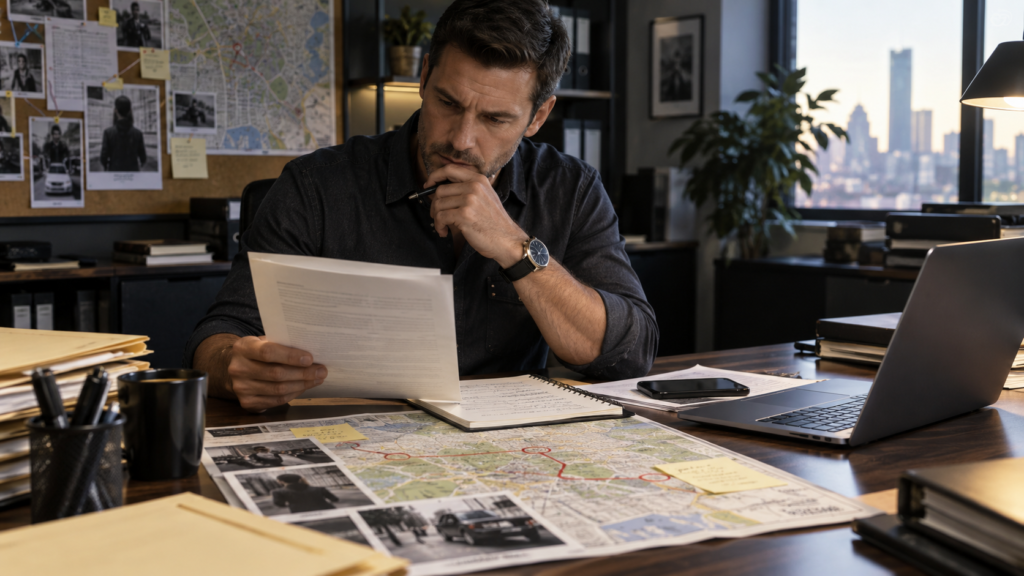
There are many reasons someone may need to find another person. You may be trying to locate a witness, reconnect with a family member, find someone who stopped responding, confirm an address for a legal matter, locate a former tenant, track down a person connected to a business dispute, or find someone whose current whereabouts are unknown.
When the reason is serious, the search can feel frustrating fast. Online searches may lead to outdated addresses, disconnected phone numbers, old social media profiles, or people with similar names. You may find a possible lead, but not know whether it is accurate. You may also worry about what you are legally allowed to do.
That is where a private investigator can help.
A professional investigator can use lawful research methods, public records, databases, skip tracing tools, interviews, and factual verification to help locate someone or confirm whether a lead is reliable. The goal is not to harass, intimidate, or invade someone’s privacy. The goal is to find accurate information for a legitimate legal or personal purpose.
If you need help finding someone in Buckhead, Atlanta, or elsewhere in Georgia, Buckhead Private Investigator can help evaluate whether skip tracing, background research, witness location, or another investigative approach makes sense.
Start by Clarifying Why You Need to Find Them
Before you begin searching, get clear about the reason. The purpose of the search matters because it affects what methods may be appropriate, what information is useful, and how the findings should be handled.
Legal reasons may include finding a witness, locating someone for civil litigation, confirming an address, serving documents, supporting an attorney, identifying a party in a dispute, or finding someone connected to a court matter. Personal reasons may include reconnecting with a relative, finding an old friend, locating someone who stopped responding, or confirming whether someone is safe.
A private investigator may ask why you need to locate the person. This is not just curiosity. Professional investigators need to understand the purpose so they can avoid improper searches and keep the investigation within ethical and legal boundaries.
If the matter involves a lawsuit, divorce, custody dispute, debt, estate issue, or other legal concern, speak with your attorney about how the information should be gathered and used.
Gather the Information You Already Have
The more accurate starting information you provide, the more efficient the search may be. Even small details can help narrow possibilities.
Helpful information may include the person’s full name, maiden name, aliases, date of birth, last known address, phone numbers, email addresses, previous employers, known relatives, vehicle information, social media profiles, schools attended, business names, court records, old photos, or known locations.
Timelines are also useful. When did you last hear from them? Where were they living at the time? Did they move recently? Were they connected to a specific workplace, relationship, business, or legal matter? Did they mention a city, job, family member, or travel plan?
If you only have partial information, that is okay. A private investigator may still be able to help, but the search may take more work. Buckhead Private Investigator’s article on what information can a private investigator find about someone explains how different details can support an investigation.
Do Not Rely Only on Free Online Searches
Search engines, social media platforms, and free people-search websites can sometimes provide clues, but they are often incomplete or outdated. Many free sites recycle old addresses, list relatives incorrectly, confuse people with similar names, or provide information that is years behind.
This can be especially frustrating when you are dealing with someone who has moved frequently, changed names, uses a common name, has limited online presence, or intentionally avoids easy contact.
A private investigator may use professional research tools and verification methods to separate good leads from bad ones. The value is not just finding a possible address. It is determining whether the information appears current, connected, and useful.
This is where skip tracing can be helpful. Skip tracing is the process of using available records and investigative methods to locate someone whose current whereabouts are uncertain.
Understand the Difference Between Finding and Contacting
Finding someone does not always mean contacting them directly. In many situations, the goal is to confirm a location, identify a current address, document a lead, or provide information to an attorney.
For example, if you need to locate a witness, your attorney may decide how and when the witness should be contacted. If you need to serve legal documents, a process server may need the address. If you are trying to reconnect with someone personally, contact should still be handled respectfully.
Private investigators do not force contact. They also should not help someone harass, threaten, stalk, or intimidate another person. If there is a protective order, safety concern, or legal restriction, that must be disclosed immediately.
Buckhead Private Investigator’s guide on private investigator vs. process server explains the difference between locating someone and formally serving legal documents.
If It Is for a Legal Case, Talk to Your Attorney
If your search is connected to a legal matter, your attorney should be involved early. An attorney can explain what information is relevant, how it may be used, and whether the investigator should coordinate directly with the legal team.
This is especially important for witness location, divorce, custody, civil disputes, estate matters, business disputes, or litigation support. Information gathered the wrong way may create problems, even if the underlying reason is valid.
A private investigator can help locate people, document findings, and provide factual reports. Your attorney can decide how those findings fit into the legal strategy.
Buckhead Private Investigator’s article on how private investigators support attorneys and legal teams is a helpful related topic for understanding how investigators may assist in legal matters.
If You Need to Find a Witness
Witness location is one of the most common legal reasons to find someone. A witness may have moved, changed phone numbers, stopped responding, or never been fully identified. They may have information related to an accident, dispute, criminal matter, civil case, workplace issue, or family law concern.
A private investigator may help identify the witness, confirm current contact details, locate addresses, review public records, or document possible leads. In some cases, investigators may also help conduct witness interviews depending on the scope and legal strategy.
Finding a witness can be time-sensitive. Memories fade, people move, and contact information becomes outdated. If a witness matters to a case, it is usually better to begin the search sooner rather than later.
Buckhead Private Investigator’s article on whether a private investigator can help find a witness in Georgia explains this kind of investigation in more detail.
If Someone Stopped Responding
Sometimes the reason is personal. Someone may stop responding after a relationship, business arrangement, financial exchange, family conflict, or online dating situation. You may not know whether they are avoiding you, using a false identity, experiencing a crisis, or simply moved on.
A private investigator may be able to help verify identity, confirm whether contact information is accurate, locate a current address, or determine whether the person’s story matches available facts.
However, there are limits. A PI cannot force someone to respond, disclose private protected information, or help with harassment. If the person has chosen not to communicate, that must be handled carefully and respectfully.
Buckhead Private Investigator’s article on how a private investigator can help when someone stops responding is a useful resource for this situation.
If You Need to Confirm a Current Address
A current address can matter for legal documents, debt disputes, witness location, family matters, business conflicts, or personal safety concerns. But address information online is often unreliable.
A private investigator may help identify current and past addresses, compare records, evaluate whether a person is likely connected to a location, and provide a clearer picture of where they may be found.
This can be especially useful when the person has moved recently, uses multiple addresses, lives with someone else, receives mail elsewhere, or has a limited digital footprint.
Buckhead Private Investigator’s guide on whether a private investigator can find someone’s current address explains why address verification is more complicated than simply searching a name online.
If You Are Trying to Reconnect With Family
Finding a family member can be emotional. You may be looking for an estranged parent, adult child, sibling, extended relative, biological family member, or someone you lost contact with years ago.
A private investigator may help locate possible addresses, name changes, relatives, public records, or other clues. But personal reconnecting should be handled carefully. Not everyone may want contact, and some situations may involve sensitive family history.
In these cases, the goal may be to identify a path for respectful contact, not to pressure the person. A professional can help gather facts discreetly so you can decide how to proceed.
If the matter involves adoption, estate issues, guardianship, or legal family concerns, consult an attorney about any rules or restrictions that may apply.
If You Are Concerned About Safety
If you are trying to find someone because you believe they may be in immediate danger, contact law enforcement or emergency services first. A private investigator can help with many location matters, but urgent safety concerns should go to the proper authorities.
Examples may include threats of self-harm, domestic violence concerns, missing vulnerable adults, missing children, or immediate danger. A PI may be able to assist in some non-emergency missing person matters, but emergency response should not be delayed.
Buckhead Private Investigator’s article on how private investigators help locate missing persons in Buckhead provides more information about missing-person-related investigations.
Avoid Illegal or Risky DIY Methods
When someone is hard to find, it can be tempting to take shortcuts. Do not hack accounts, install tracking devices, impersonate someone, access private records, use false identities, threaten anyone, or follow someone in a way that becomes harassment.
These actions can create legal problems and may damage your case or personal credibility. They can also put you or the other person at risk.
Private investigators must work within legal limits. Buckhead Private Investigator’s article on what are the limits of private investigation in Georgia explains why investigators cannot access everything and cannot ignore privacy laws.
The safer approach is to gather what you legally have, speak with a professional, and let them explain what can be done properly.
Know What a Private Investigator Cannot Promise
A private investigator may be able to find strong leads, verify information, and document findings, but no investigator can guarantee that every person can be found. Some people are harder to locate than others.
A person may use aliases, move frequently, avoid public records, have limited digital presence, live with others, use prepaid phones, or intentionally conceal their location. Records may be outdated, incomplete, or conflicting.
A professional investigator should be honest about limitations. They should not promise impossible access, secret government-level information, or guaranteed results. They should explain what methods may be used and what factors could affect the search.
If a person claims they can find anyone instantly, that should be a red flag.
Keep the Search Discreet
Discretion matters when trying to find someone. If the person learns too early that someone is looking for them, they may change behavior, move, stop using known contact information, or become harder to locate.
This is especially important in legal matters, divorce concerns, business disputes, witness location, or sensitive personal situations. Avoid posting online, contacting multiple relatives, calling workplaces, or asking mutual friends to help unless your attorney or investigator advises that it is appropriate.
Buckhead Private Investigator’s article on why discretion matters when hiring a private investigator in Buckhead explains why quiet, professional handling can protect the integrity of the investigation.
What Happens After the Person Is Located?
Once a person is located or a likely lead is identified, the next step depends on your purpose. If it is a legal matter, the information may go to your attorney, process server, or legal team. If it is a personal matter, you may decide whether to reach out respectfully. If it is a safety matter, law enforcement or another appropriate professional may need to be involved.
A private investigator may provide a report or summary of findings. The report may include relevant dates, addresses, record sources, observations, or other factual details depending on the investigation.
Do not rush into confrontation. If the situation is emotional or legal, speak with your attorney or investigator about the safest and most appropriate next step.
When to Contact Buckhead Private Investigator
You may want to contact a private investigator if you have tried basic searches and are stuck, if the matter is legal or time-sensitive, if the person has moved, if you only have partial information, or if you need discreet verification before taking action.
Buckhead Private Investigator can help evaluate whether skip tracing, background research, witness location, address verification, or another investigative method may be appropriate. To get started, contact Buckhead Private Investigator for a confidential consultation.
Final Thoughts
If you need to find someone for legal or personal reasons, start by getting clear about your purpose, gathering the information you already have, and avoiding risky or illegal DIY methods. Free online searches may provide clues, but they are often incomplete or outdated.
A private investigator can help locate people through lawful research, skip tracing, public records, address verification, and discreet investigation. Whether you are trying to find a witness, confirm an address, reconnect with family, locate someone who stopped responding, or support a legal matter, professional help can make the search more organized and reliable.
The most important step is to handle the situation carefully. Finding someone should be done legally, respectfully, and with a clear reason for the search.