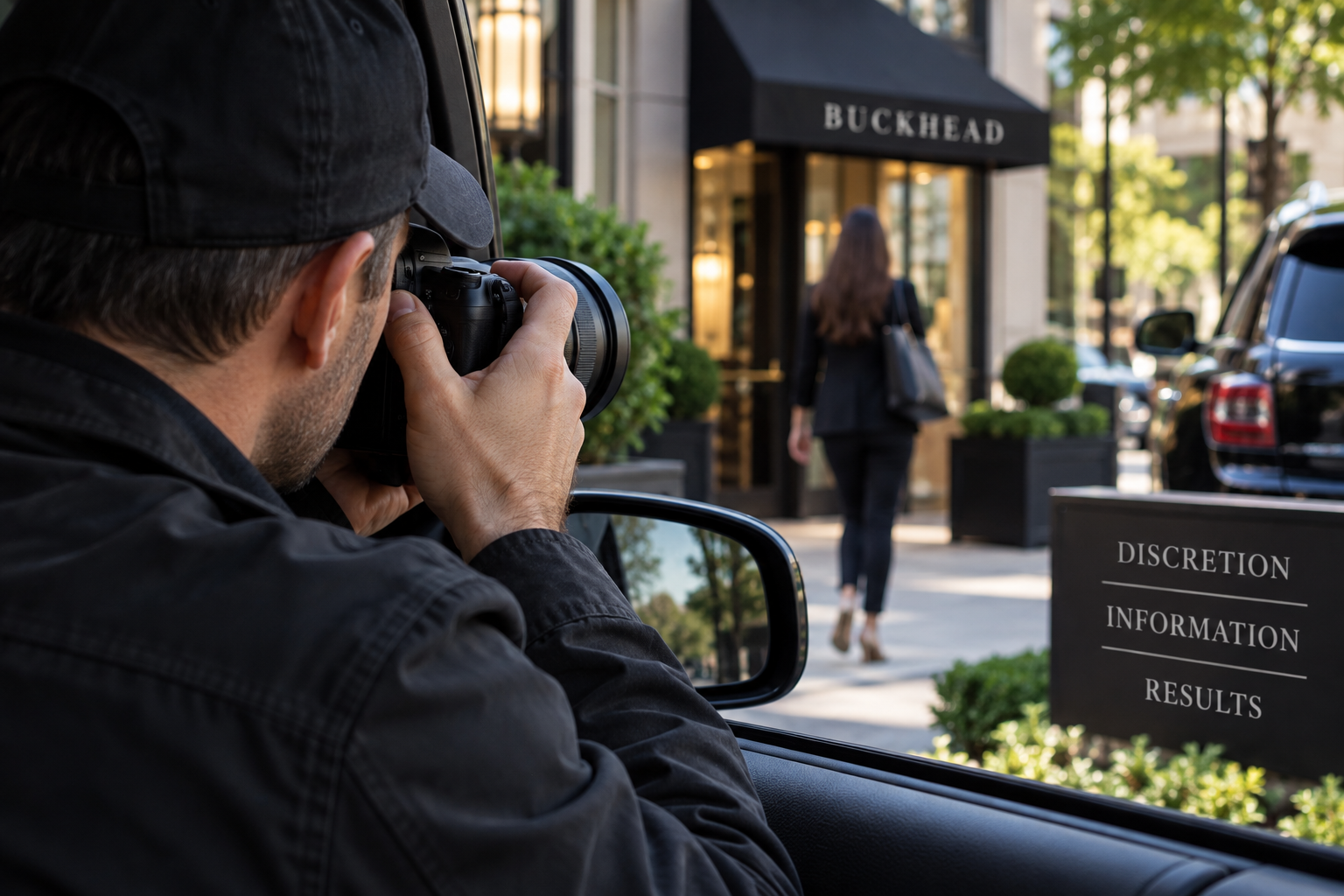
Finding a witness can be one of the most important parts of a legal matter. A witness may have seen an accident, heard a conversation, worked for a company involved in a dispute, lived near an incident, interacted with a person connected to the case, or have information that helps clarify what happened.
But witnesses are not always easy to find.
People move. Phone numbers change. Social media accounts disappear. Former employees leave companies. Neighbors relocate. Someone who was easy to contact a year ago may no longer be at the same address. In some cases, the witness may not even realize their information matters. In others, they may be avoiding contact because they do not want to be involved.
That is where a private investigator may help.
In Georgia, a private investigator can assist attorneys, individuals, businesses, and other clients by using lawful research methods to locate potential witnesses, verify identifying information, find possible current addresses, document leads, and support the legal process. A private investigator cannot force a witness to talk, give legal advice, or misuse private information, but they can often help find the right person and provide useful information to the client or attorney handling the matter.
For clients in Buckhead, professional witness location can be valuable when basic searches have failed and the case depends on finding someone with relevant information.
Why Witnesses Can Be Hard to Find
Witnesses are often difficult to locate because the information available about them is incomplete. A police report, accident report, business record, court filing, or old contact list may include a name but no current address. It may include an outdated phone number or a misspelled name. Sometimes the witness is only known by a nickname, partial name, former workplace, vehicle description, or past address.
Witnesses may also move without updating public records right away. They may use different versions of their name, get married, change jobs, move out of state, or reduce their online presence. If years have passed since the incident, the trail can become even harder to follow.
A private investigator’s role is to take the information that is available and build from it. That may mean comparing public records, address histories, court records, business records, social media activity, known associates, and other lawful sources to identify the most likely person and location.
This process is often called skip tracing, which is a professional research method used to locate people who are difficult to find. If you want a deeper explanation of that process, read What Is Skip Tracing and How Does It Help Locate People?.
How a Private Investigator Can Help Locate a Witness
A private investigator may begin by gathering all known information about the witness. This can include the person’s name, approximate age, old address, phone number, employer, social media profile, relatives, vehicle information, role in the case, or any records where the witness appeared.
From there, the investigator may use lawful databases, public records, court records, property records, address history, professional licensing records, business filings, social media research, and other investigative tools to narrow the search.
The investigator may also verify whether the information belongs to the right person. This is important because many people share the same name. A quick online search can easily point to the wrong individual. Professional verification helps avoid mistakes that could waste time, embarrass the client, or create legal problems.
A private investigator may help identify:
Possible current addresses
Previous addresses
Phone numbers or contact leads
Known relatives or associates
Employment or business connections
Social media profiles
Court records or public record references
Possible relocation history
Information that helps an attorney determine next steps
The goal is not to expose someone unnecessarily. The goal is to help locate a relevant witness in a lawful, documented way.
Witness Location vs. Witness Interviewing
Finding a witness and interviewing a witness are related, but they are not the same thing.
A private investigator may be hired only to locate the witness and provide verified information to an attorney. In other cases, the investigator may also attempt to make contact or conduct an interview, depending on the case, the client’s instructions, and legal strategy.
When attorneys are involved, the investigator should work carefully within the attorney’s direction. Some witnesses may need to be contacted in a specific way. Some may be represented by counsel. Some may be hostile, reluctant, or sensitive. Some may be important enough that the attorney wants to handle the interview personally.
A private investigator can help prepare the groundwork by finding the person, confirming identity, documenting contact attempts, and gathering background context that helps the legal team understand the witness’s role.
Private Investigators and Subpoenas in Georgia
A private investigator can help locate a witness, but a subpoena is a legal tool. In Georgia, subpoenas are governed under Title 24, Chapter 13 of the Georgia Code, which covers securing attendance of witnesses and production of evidence. Georgia Code § 24-13-21 explains that a subpoena includes a witness subpoena and a subpoena for production of evidence, and that a subpoena commands the person to attend and give testimony or produce evidence at a specified time and place.
Georgia Code § 24-13-24 addresses service of subpoenas. It provides rules for serving subpoenas, including how service may be made and how proof of service may be shown.
This matters because locating a witness is often only the first step. If the witness needs to testify, produce documents, or appear in court, an attorney may need to issue or coordinate a subpoena through the proper legal process.
A private investigator should not pretend that finding a witness gives them authority to compel testimony. They can help locate and document, but legal compulsion belongs to the court process.
If your concern involves the difference between locating someone and serving legal papers, read Private Investigator vs. Process Server: What’s the Difference?.
What Types of Cases May Need Witness Location?
Witness location can matter in many types of Georgia cases. A witness may be needed in a civil lawsuit, personal injury claim, family law matter, business dispute, fraud investigation, employment issue, insurance matter, criminal defense investigation, landlord-tenant issue, or estate dispute.
For example, in a car accident case, a witness may have seen which vehicle ran a light. In a business dispute, a former employee may know how a transaction was handled. In a custody matter, a witness may have observed behavior relevant to a parenting concern. In a fraud investigation, someone may have interacted with the person being investigated. In a missing person matter, a witness may have seen or spoken with the person before they disappeared.
Private investigators can also assist with related investigative work, such as background research, missing person cases, and current address searches. For more on related services, see How Private Investigators Help Locate Missing Persons in Buckhead, Can a Private Investigator Find Someone’s Current Address?, and Background Checks in Buckhead: What a Private Investigator Can Legally Find.
Why Professional Verification Matters
Finding a possible witness is not enough. The information must be verified.
Online search tools often return inaccurate or outdated results. A person’s old address may still appear as current. A phone number may belong to a relative. A social media profile may belong to someone with a similar name. A public record may be connected to the wrong person.
A private investigator uses cross-checking to reduce these risks. They may compare date of birth ranges, address history, relatives, employers, court records, social profiles, and other identifiers to confirm that the lead matches the correct person.
This is especially important in legal matters. Contacting the wrong person can waste time, damage credibility, or create privacy issues. If an attorney is relying on the information, accuracy matters.
Legal and Ethical Limits
A private investigator must follow the law when locating a witness. They cannot hack email accounts, access private phone records illegally, install spyware, impersonate law enforcement, trespass on private property, threaten a witness, harass someone, or secretly record private conversations in unlawful ways.
Georgia law also restricts certain forms of eavesdropping, surveillance, and recording in private places. Georgia Code § 16-11-62 addresses unlawful eavesdropping or surveillance, including secretly overhearing, recording, observing, or photographing private conversations or activities in certain private settings.
Witness location should also avoid intimidation. The point is to find and document information, not pressure someone into saying something. If a witness is reluctant, hostile, represented by an attorney, or connected to an active legal matter, communication should be handled carefully.
A reputable private investigator will understand these boundaries and will not offer illegal shortcuts.
Why Licensing Matters in Georgia
In Georgia, private detective and security agencies are regulated by the Georgia Secretary of State’s Board of Private Detective and Security Agencies. The Board administers the Private Detective & Security Agencies Act, determines qualifications for licensure, and can investigate complaints and take disciplinary action.
This matters when hiring someone to locate a witness because sensitive legal information may be involved. A licensed investigator should understand confidentiality, documentation, legal limits, and ethical investigative methods.
Before hiring, clients should verify that they are working with a legitimate professional or agency. You can learn more about the Buckhead firm through the About page or reach out through Contact Us.
What to Provide Before the Search Begins
If you are hiring a private investigator to help find a witness, provide as much accurate information as possible. Even small details can help.
Helpful information may include:
Full or partial name
Nickname or maiden name
Approximate age
Last known address
Last known phone number
Employer or former employer
Email address
Social media profile
Vehicle information
Relationship to the case
Date and location of the incident
Any reports, filings, or documents mentioning the witness
Names of known relatives or associates
The more starting information the investigator has, the better the chances of narrowing the search efficiently. If you are working with an attorney, ask whether the investigator should communicate directly with the attorney to keep the search aligned with legal strategy.
Can a Private Investigator Guarantee They Will Find a Witness?
No private investigator should guarantee that a witness will be found. Some people are harder to locate than others. Records may be outdated, the person may have moved out of state, the name may be incomplete, or the available details may not be enough to confirm identity.
A professional investigator can explain what is realistic based on the information available. They may also explain what steps they will take, what sources may be checked, and what type of report or update you can expect.
Be cautious of anyone who guarantees results before reviewing the case. A legitimate investigation depends on facts, not promises.
Final Thoughts
A private investigator can often help find a witness in Georgia by using lawful research methods, skip tracing, public records, address history, social media review, database research, and professional verification. This can be especially helpful in legal matters where a witness may have moved, changed contact information, or become difficult to reach.
However, locating a witness is not the same as forcing them to testify. Subpoenas and court appearances must follow Georgia legal procedures, usually with attorney involvement. A private investigator’s role is to locate, verify, document, and support the process within legal and ethical limits.
For clients in Buckhead, hiring a licensed private investigator can help turn limited witness information into actionable leads. If a witness may be important to your case, professional help can save time, reduce errors, and give your attorney or legal team better information to work with.