Yes, a private investigator can often help find someone’s current address, but only through lawful and ethical methods. This type of work is commonly called a locate investigation or skip tracing. It may be used to find a witness, locate someone who needs to be served with legal papers, reconnect with a missing family member, support a civil case, verify a person’s residence, or help an attorney move a case forward.
However, finding someone’s address is not the same as having unlimited access to private information. A private investigator cannot hack accounts, impersonate law enforcement, break into databases, steal mail, trespass, install spyware, or use harassment to force someone’s location. The investigator’s job is to gather and verify information legally.
For clients in Buckhead and the surrounding Atlanta area, a private investigator may use public records, databases, address history, social media, court filings, property records, business records, vehicle-related clues, interviews, and surveillance to locate a current address. The process depends on how much information is already available and how difficult the person is to find.
Why Someone May Need a Current Address
There are many legitimate reasons to hire a private investigator to find someone’s current address. Attorneys may need to locate a witness, defendant, heir, beneficiary, former employee, or person connected to a case. Individuals may need to find someone for family law matters, unpaid debts, missing person concerns, adoption-related searches, or personal safety documentation.
A business owner may need to locate a former employee, vendor, contractor, debtor, or person involved in fraud. A landlord may need information connected to a former tenant. A family member may be trying to reconnect with someone they lost contact with.
The reason matters. A responsible private investigator will want to understand why the address is needed before accepting the case. If the purpose appears to involve harassment, stalking, intimidation, or violating a protective order, a reputable investigator should refuse the work.
Georgia law defines stalking in part as following, placing under surveillance, or contacting another person without consent for the purpose of harassing and intimidating them. That legal boundary matters in address-location cases because finding someone should not be used to threaten, pressure, or harass them.
What Information Helps a Private Investigator Start
The more accurate information you provide, the easier it may be for a private investigator to locate someone’s current address. Even small details can help narrow the search.
Helpful information may include the person’s full legal name, date of birth, previous addresses, phone numbers, email addresses, known relatives, employer information, vehicle details, social media profiles, past court cases, business names, or the last known city or state.
A recent photograph can also help if field verification is needed. If the person uses aliases, nicknames, maiden names, or business names, those should be shared as well.
Incomplete information does not always make a search impossible, but it can make the investigation take longer. For example, finding “John Smith in Georgia” is much harder than finding a person with a full name, approximate age, last known address, and known family connections.
A good private investigator will begin by organizing the known information and identifying the most reliable leads.
Public Records Can Help Confirm Address History
Public records are often one of the first places a private investigator looks. Depending on the case, this may include property records, court filings, business registrations, professional licenses, voter registration data where lawfully available, bankruptcy filings, civil case records, criminal court records, and other publicly accessible information.
Public records can show where someone has lived, where they own property, where they have received legal notices, where they do business, or where they have appeared in court documents.
However, public records are not always current. Someone may have moved, sold property, used a mailing address, stayed with another person, or intentionally avoided updating records. That is why a private investigator does not usually rely on one record alone. The goal is to confirm the current address using multiple sources.
For example, a property record may show ownership, but not necessarily where the person lives. A court record may show a mailing address, but it could be outdated. A business filing may list a registered office, but not a residence. The investigator’s job is to connect these details and verify what is most likely accurate.
Databases and Skip Tracing Tools
Private investigators may use specialized databases and skip tracing tools to identify possible addresses, phone numbers, relatives, associates, employment connections, and historical records. These tools can be helpful, but they are not magic.
Database information can be outdated, duplicated, incomplete, or wrong. A person may appear connected to multiple addresses, old phone numbers, former roommates, family members, or businesses. A professional investigator knows that database results are leads, not final proof.
The strongest locate investigations involve verification. If a database shows a possible address in Buckhead, the investigator may compare it against other records, social media activity, property details, vehicle sightings, business records, or field observations before treating it as current.
This is one reason hiring a private investigator can be more effective than using a cheap online people-search website. A public search tool may give you a long list of possible addresses. A private investigator works to determine which address is actually current and useful.
Social Media and Online Clues
Social media can sometimes help identify someone’s current location or address area. People may tag local businesses, post photos from neighborhoods, mention employers, interact with local groups, or share location-based information without realizing it.
A private investigator may review public social media profiles, public comments, tagged photos, business pages, event activity, professional profiles, and other online sources. These clues can help narrow where someone lives or spends time.
However, an investigator cannot hack private accounts, guess passwords, create deceptive access to private messages, install spyware, or impersonate someone to obtain restricted information. Publicly available information is different from private digital access.
Georgia law also restricts certain forms of eavesdropping, surveillance, and private observation. For example, the state’s eavesdropping and surveillance statute prohibits secretly recording private conversations originating in a private place and restricts observing, photographing, or recording private activities out of public view without consent.
A professional investigator will use online research legally and carefully.
Surveillance and Field Verification
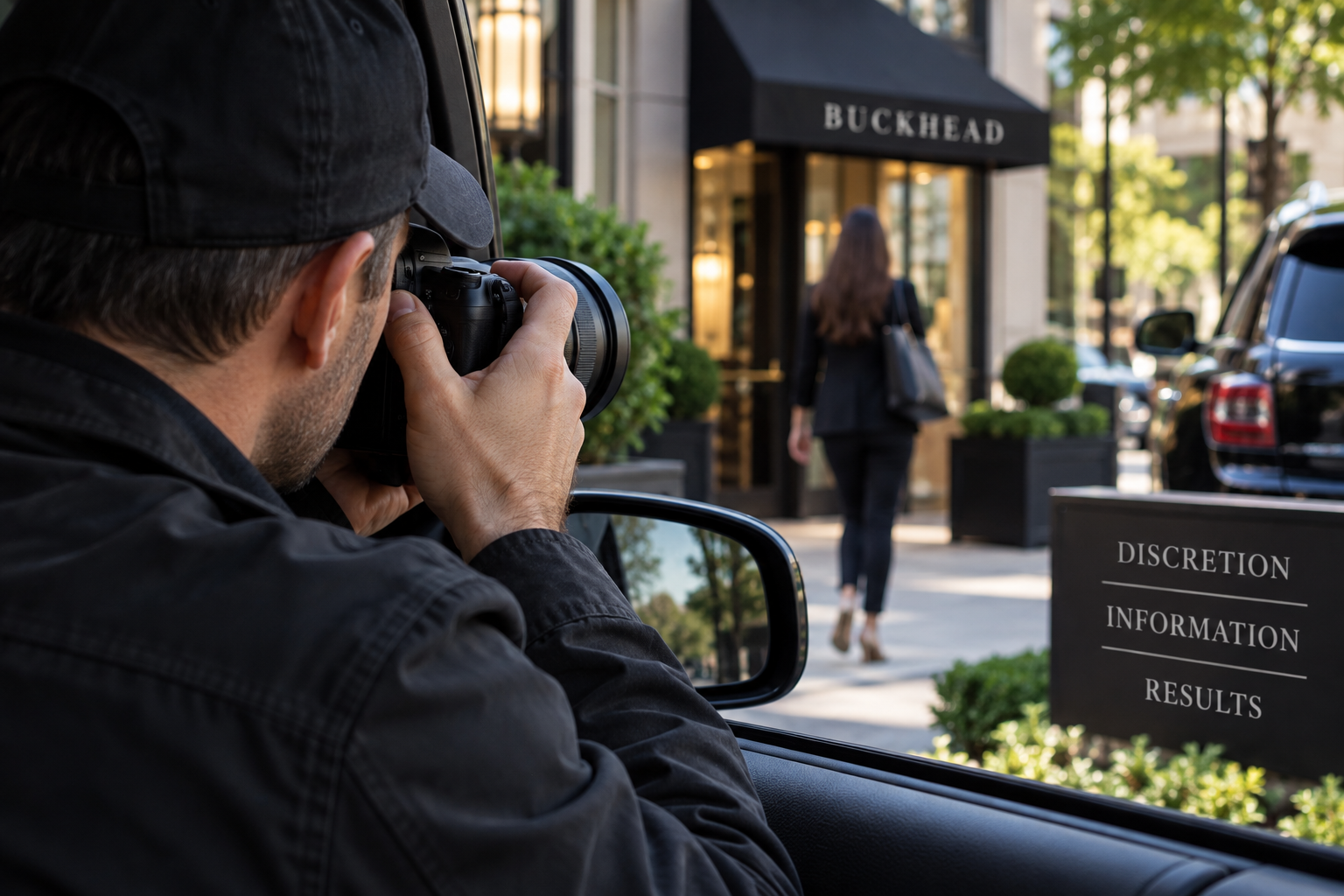
In some cases, finding a current address requires field work. A private investigator may visit a suspected address, observe from a lawful location, document whether the subject appears to live there, note vehicle presence, verify routines, or confirm that the person regularly enters and exits the property.
Field verification may be important when the address is needed for legal service, witness location, custody documentation, or litigation support. It can help distinguish between a mailing address, old address, family member’s address, and actual residence.
Surveillance must be done lawfully. A private investigator cannot trespass, peer into private windows, enter gated property without permission, harass neighbors, threaten the subject, or create a confrontation. The investigator may observe from public areas or other lawful locations.
Professional field verification is factual. It may document that a vehicle registered or associated with the subject was seen at the location, that the subject was observed entering the residence, or that a neighbor confirmed the person lives there. The investigator should avoid unsupported assumptions.
Finding Someone Who Is Avoiding Service
One of the most common reasons to find a current address is service of process. If someone needs to be served with divorce papers, a subpoena, a summons, a complaint, or other legal documents, the address must be accurate enough for service to be attempted.
Some people are easy to locate. Others may move frequently, avoid answering the door, use relatives’ addresses, or intentionally hide from legal service. In those situations, a private investigator may help locate or verify the person before a process server attempts delivery.
This is where private investigators and process servers often work together. The private investigator may find the person’s current address or schedule. The process server then delivers the legal papers according to the applicable rules.
A private investigator may also help determine the best time and location for service, such as a residence, workplace, or other lawful location where the person can be reached.
Can a Private Investigator Find Any Address?
Not always. A private investigator can often find a current address, but no ethical investigator should guarantee results. Some people are difficult to locate because they move often, use aliases, live off the record, stay with friends, avoid formal employment, use prepaid phones, or intentionally hide their location.
The difficulty also depends on how much starting information is available. A full legal name, date of birth, and last known address may be enough to begin a strong search. A vague nickname and no other details may require more time and may not lead to a confirmed result.
A reputable investigator should be honest about the likelihood of success. They may begin with a limited search, then recommend additional work if the first round does not confirm the address.
What a Private Investigator Cannot Do to Find an Address
A private investigator cannot use illegal shortcuts to find someone’s address. They cannot access private phone records without authorization, hack email accounts, track someone’s phone, steal mail, impersonate a government official, enter private property illegally, threaten friends or relatives, or use spyware.
They also cannot use the investigation to help a client harass, intimidate, or stalk someone. If a client wants an address for an improper reason, the investigator should decline the case.
In Georgia, private detective businesses are regulated, and state law requires those seeking to operate as private detective businesses to apply for a license and meet state requirements. Working with a licensed professional helps reduce the risk of illegal methods or unreliable information.
Why Professional Verification Matters
Finding an address is only useful if it is accurate. An outdated address can waste time, delay a court case, frustrate service attempts, or lead to the wrong person being contacted. Professional verification helps reduce those problems.
A private investigator may provide a report explaining how the address was identified and what evidence supports it. The report may include records reviewed, dates of observations, associated vehicles, public information, and other facts.
This documentation can be especially helpful for attorneys, process servers, businesses, or individuals who need more than a guess from an online search.
Final Thoughts
A private investigator can often find someone’s current address through lawful skip tracing, public records research, database review, social media research, interviews, surveillance, and field verification. This can be useful for legal cases, witness location, service of process, family matters, business disputes, and other legitimate needs.
However, there are limits. A private investigator cannot hack, trespass, steal records, secretly access private accounts, use spyware, or locate someone for harassment or intimidation. The reason for the search matters, and the methods must stay within the law.
If you need to find someone’s current address in Buckhead or the surrounding Atlanta area, a licensed private investigator can help verify leads, narrow down possible locations, and provide factual documentation. The goal is not just to find an address. The goal is to find the right address legally, accurately, and professionally.